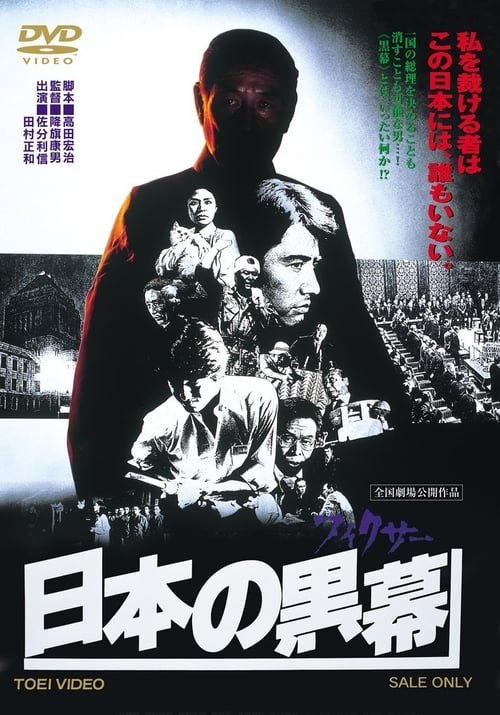
The Fixer
Plot
Political fixer Homei Yamaoka's misdeeds come to light, throwing Japanese politics into deadly confusion. But he's not going down without a fight.
Get the Weekly Woke Watchlist
New and trending movies scored for woke bias, preachy messaging, and forced political themes — before you waste your evening.
No spam. One useful email per week.
Overall Series Review
Categorical Breakdown
The narrative focuses on political and financial power brokering and corruption, not immutable characteristics, race, or intersectional hierarchy. The casting and story are authentic to the Japanese political landscape they are scrutinizing, with no forced diversity or vilification of any ethnic group.
The film's critique is aimed specifically at the rampant political and corporate corruption of specific actors in postwar Japan's power structure. This focus on the need for integrity and accountability within a system is a critique of criminal activity, not a wholesale civilizational self-hatred of the nation or its core cultural values.
The core plot is a male-dominated political and crime thriller centered on the actions of the 'fixer' and his male associates. There is no evidence of the 'Girl Boss' trope, emasculation of male characters, or anti-natalist/anti-family messaging; gender dynamics are entirely secondary to the high-stakes political machinations.
As a 1979 Japanese political crime drama, the film's subject matter is entirely focused on a bribery scandal involving high-level politicians and business figures. The narrative does not contain any elements of sexual ideology, centering of alternative sexualities, or deconstruction of the nuclear family.
The central conflict is political and legal criminality (bribery, tax evasion), not a spiritual or theological one. The narrative operates within a framework that implicitly acknowledges objective wrongdoing, as the characters are being pursued for illegal acts, and there is no focus on attacking religion or traditional faith.
Get the Weekly Woke Watchlist
New and trending movies scored for woke bias, preachy messaging, and forced political themes — before you waste your evening.
No spam. One useful email per week.