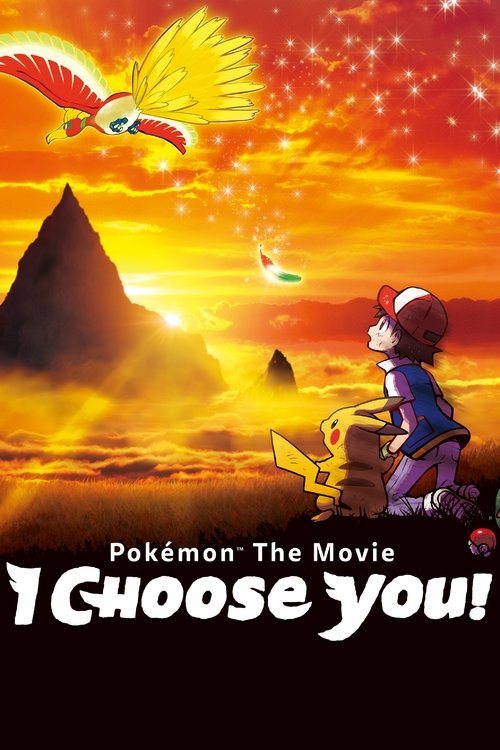
Pokémon the Movie: I Choose You!
Plot
Ash Ketchum wakes up late one morning after having broken his alarm clock in his sleep. He eventually makes it to Professor Oak's lab, but is told that the three starter List of Pokémon (Bulbasaur, Squirtle, and Charmander) have already been taken by Trainers who were on time. However, Oak reveals that he has one more Pokémon, an Electric-type named Pikachu. Despite its volatile and feisty personality, as well as its refusal to get inside a Poké Ball, Ash happily takes Pikachu for his journey.
Get the Weekly Woke Watchlist
New and trending movies scored for woke bias, preachy messaging, and forced political themes — before you waste your evening.
No spam. One useful email per week.
Overall Series Review
Categorical Breakdown
The plot's central mechanism is universal meritocracy; Ash earns the title of 'Rainbow Hero' through courage and the strength of his friendship with Pikachu, not through any immutable characteristic. The villain's downfall is explicitly due to his own arrogance and cruelty toward his Pokémon. There is no lecturing on privilege or systemic oppression.
The movie is an active celebration and homage to the 20th anniversary of the franchise's established world, rules, and core mythology. Institutions like the trainer journey, the role of the Professor, and the spiritual lore of the legendary Pokémon are treated with reverence, affirming the heritage of the series.
Ash remains the primary protagonist and the central 'Rainbow Hero' of the prophecy, and his masculinity is protective and affirmed through his bond with Pikachu. The new female companion, Verity, is an active trainer but does not take over the main narrative or portray the 'Mary Sue' trope. The depiction of Ash's mother is traditional and supportive, and there is no anti-natalist messaging.
The story adheres to a normative structure, focusing on a non-romantic, moral bond between a boy and his creature. The traveling companions are a male and female pair, and the central family unit (Ash and his mother) is depicted positively. The 'Rainbow Hero' prophecy is a direct reference to the Legendary Pokémon Ho-Oh, which leaves a Rainbow Feather, and is not a reference to sexual identity or gender ideology.
The core of the plot is a mythological quest to meet a legendary, god-like entity, Ho-Oh. This search for transcendence, a higher power, and a spiritual truth (the Ho-Oh legend) serves as the driving force of the narrative, affirming the existence of a higher moral law and destiny within the Pokémon world's mythology.
Get the Weekly Woke Watchlist
New and trending movies scored for woke bias, preachy messaging, and forced political themes — before you waste your evening.
No spam. One useful email per week.