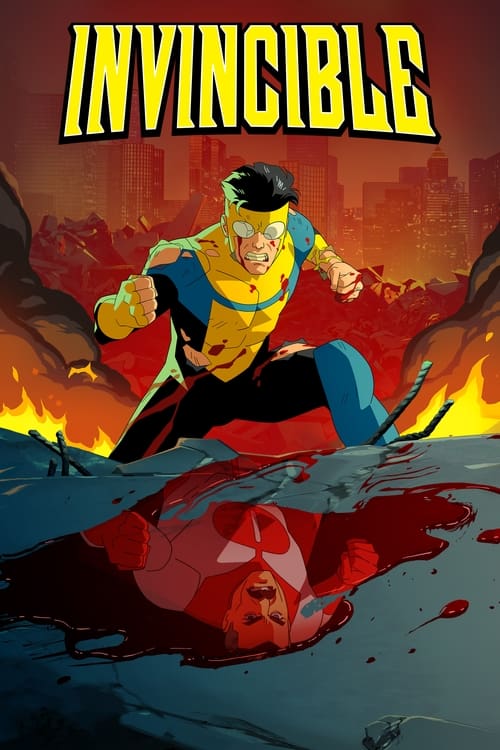
Invincible
Season 2 Analysis
Season Overview
After an earth-shattering betrayal, Mark fights to rebuild his life. In the face of apocalyptic threats, he discovers new allies and wrestles with his greatest fear - that he might become his father.
Season Review
Categorical Breakdown
The core Viltrumite conflict frames a white-presenting alien race as a hyper-masculine, genocidal fascist regime that believes in their own inherent superiority and privilege over all other races. The protagonist, Mark Grayson, is biracial (Asian/White-presenting alien). His main human love interest, Amber Bennett (race-swapped from the comics to be Black), continues to be defined by a moralizing, activist-adjacent personality. Her character frequently forces narrative conflict based on a perceived lack of 'wokeness' or 'privilege awareness' from Mark regarding his hero duties. Casting choices prioritize diversity, but the narrative often uses race and immutable characteristics as a lens through which to critique the protagonist’s actions.
The Viltrumite Empire and its white-presenting patriarch, Omni-Man, represent the ultimate deconstruction of home and heritage, viewing Earth and humanity as a weak civilization to be conquered. Mark's entire hero journey centers on rejecting his ancestral Viltrumite culture and fighting to defend Earth's civilization and institutions (family, government agency) from outside hostility. This creates a moral tension where the anti-Western/anti-heritage narrative resides primarily with the villains, while the protagonist actively displays gratitude for and defends his home.
Female leads Atom Eve and Amber Bennett are morally flawless and intellectually superior figures in their respective spheres. Atom Eve is a powerful Mary Sue-like figure, a 'God-tier' superhero whose only struggles are rooted in the 'shitty' world and the failures of the men and family around her. Mark's mother, Debbie Grayson, experiences deep trauma and questions her life's worth after serving a traditional wife/mother role, directly framing motherhood and wifedom as a source of pain and confinement inflicted by a toxic male (Omni-Man). The narrative positions the men, particularly Rex Splode and Omni-Man, as either morally flawed, toxic, or comically incompetent.
The main supporting character, William Clockwell, is openly gay from the beginning of the series, an alteration from the source material intended to introduce LGBTQ+ representation immediately. His sexuality is an accepted part of his character and is the basis for a minor subplot involving his personal life. The presence of the character normalizes non-traditional sexuality, but his identity is a background trait and is not the central, driving force of the main storyline, nor is queer theory actively lectured.
The series focuses heavily on questions of ethics and the moral cost of violence. The narrative champions subjective, utilitarian morality, particularly in the actions of Cecil Stedman and the GDA. The main antagonist, Angstrom Levy, operates on a warped 'greater purpose' that justifies evil, reinforcing the idea of subjective morality versus Mark’s struggle to find a personal, secular code of good. No organized religion, particularly Christianity, is directly referenced as a source of good or evil, creating a spiritual vacuum where the primary moral law is defined by an individual’s subjective choice and 'super-power dynamics.'