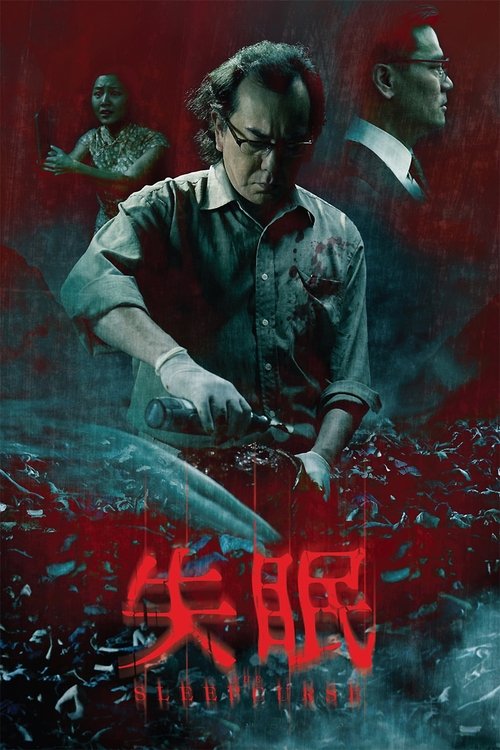
The Sleep Curse
Plot
In 1990, Neurologist Lam Sik Ka and his former flame suffer from the generational sleep curse that rooted in their both families war engagement during World War Two. Lam tries to save her flame from the grudge.
Get the Weekly Woke Watchlist
New and trending movies scored for woke bias, preachy messaging, and forced political themes — before you waste your evening.
No spam. One useful email per week.
Overall Series Review
Categorical Breakdown
The plot's conflict is driven by a historical power dynamic of national and gender oppression (Japanese occupiers and Chinese collaborators exploiting Chinese comfort women). The narrative is not concerned with 'whiteness,' forced diversity, or modern intersectional hierarchy, but rather with a specific historical atrocity in an Asian context. The primary antagonist is a vengeful spirit, a victim of historical violence.
The film critiques the mercilessness of the Japanese occupiers and the cowardice of a Chinese collaborator. This is a critique of wartime actions and individuals, not a broad demonization of the home culture or Western civilization. The setting and moral framework are rooted in Asian cultural concepts of generational karma and spiritual justice.
The core plot is explicitly driven by the historical suppression and exploitation of women during wartime, specifically the brutal institution of 'comfort women.' The vengeful female ghost subversively serves as the instrument of justice, directly responding to the 'phallocentrism of war.' While not a modern 'Girl Boss' trope, the moral center is the righteous rage of the oppressed female victim. The focus is on critique of violence against women rather than anti-natalism.
No evidence suggests the presence of alternative sexualities, deconstruction of the nuclear family, or gender ideology. The themes are strictly focused on historical trauma, a heterosexual relationship, and a father/son generational curse.
The entire horror mechanism is built around a supernatural curse, a spiritual force of vengeance (grudge/karma) that enforces objective moral consequences for past evils. The protagonist seeks help from a medium, affirming the reality of the spiritual realm and transcendent morality. There is no hostility toward religion or embrace of moral relativism; instead, the film argues that the 'Evil must deserves the karma.'
Get the Weekly Woke Watchlist
New and trending movies scored for woke bias, preachy messaging, and forced political themes — before you waste your evening.
No spam. One useful email per week.