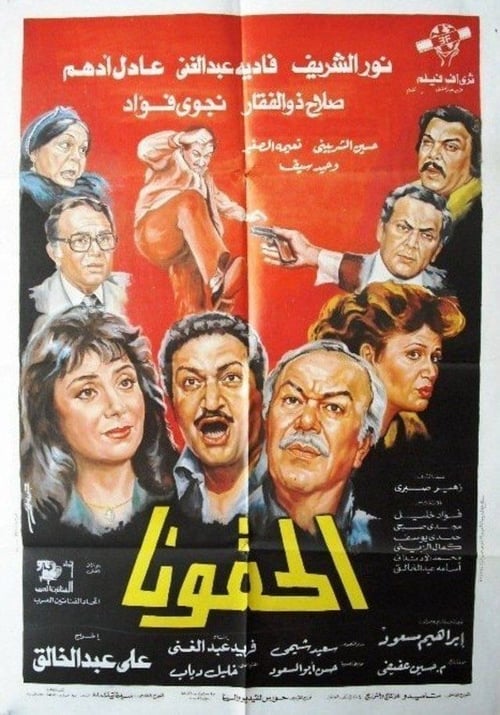
Help Us
Plot
Ra'fat is a businessman whose kidney is failing. As he requires constant blood transfusions, he hires Korashy, his blood donor, as his driver. But when Korashy undergoes surgery, he discovered that his kidney was removed without his consent.
Get the Weekly Woke Watchlist
New and trending movies scored for woke bias, preachy messaging, and forced political themes — before you waste your evening.
No spam. One useful email per week.
Overall Series Review
Categorical Breakdown
The entire plot focuses on a clear hierarchy of privilege where a wealthy businessman, Ra'fat, exploits a poor man, Korashy, for his body parts. The narrative exists to lecture on the systemic oppression of the lower class by the economic elite, directly aligning with the 'privilege' aspect of this category. The villain is defined by his wealth and power over the less fortunate, a strong critique of economic privilege, though the critique is not rooted in race, immutable characteristics, or the vilification of whiteness.
The film functions as a critique of specific, modern societal corruption, namely organ trafficking and the greed of the wealthy elite. It frames the institution of commerce and the privileged class as fundamentally flawed. This is a targeted deconstruction of a corrupt social element, stopping short of demonizing the nation's entire cultural heritage or ancestors. The film critiques contemporary flaws rather than attacking the foundational civilization.
The plot centers entirely on the drama between two male characters, the exploitative rich man and the victimized poor man. The narrative contains no elements of the modern 'Girl Boss' trope, no emasculation of males as a thematic device, and no messaging that frames motherhood as a prison. The core conflict is purely masculine and economic in nature, presenting a normative structure focused on exploitation and survival.
The narrative's focus on illegal organ trafficking and class conflict leaves no room for the introduction of alternative sexual ideologies. There is no deconstruction of the nuclear family as a central theme, no focus on sexual identity, and no presence of gender theory. The film presents a normative structure for its social and moral drama.
The core moral of the film is a condemnation of the extreme corruption and lack of conscience exhibited by the wealthy Ra'fat. His moral failing, which allows him to steal a man's kidney, serves as a clear illustration of moral relativism and the absence of a higher moral law in the pursuit of self-preservation. However, the film's narrative structure positions this corruption as evil, thereby reinforcing the idea of an objective, transcendent moral order by championing the justice sought by the wronged poor man.
Get the Weekly Woke Watchlist
New and trending movies scored for woke bias, preachy messaging, and forced political themes — before you waste your evening.
No spam. One useful email per week.