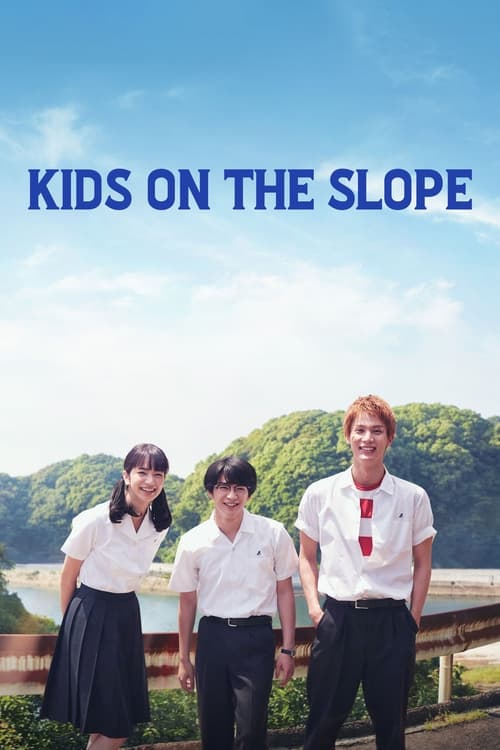
Kids on the Slope
Plot
Two different students—a successful but aloof academic and a rebellious but kindhearted delinquent—form a friendship through their love of jazz music.
Get the Weekly Woke Watchlist
New and trending movies scored for woke bias, preachy messaging, and forced political themes — before you waste your evening.
No spam. One useful email per week.
Overall Series Review
Categorical Breakdown
The character Sentarō Kawabuchi is explicitly portrayed as suffering from discrimination in 1960s Japan because he is biracial (half-White), being ostracized by society and abandoned by his mother due to this prejudice. This focuses on the systemic oppression of an immutable characteristic (race) but it is contextualized within a specific Japanese historical setting, not as a general vilification of 'whiteness.' Character merit and shared passion for jazz music are the defining factors of the central friendship and the overall plot.
The narrative is a nostalgic and affectionate portrayal of 1960s Japan and the period's cultural embrace of American jazz music. There is no hostility toward Japanese culture, history, or ancestors, and the adoption of American jazz is treated as a beautiful, unifying force. The setting emphasizes a specific time and place rather than universal civilizational self-hatred.
Female characters like Ritsuko are mainly defined by their role within the central love triangle and as the emotional support for the male protagonists. Reviewers note that the women's ambitions and narrative arcs are secondary, existing primarily to serve the story of the men. The manga's conclusion explicitly shows a main female character is pregnant with the male lead's child, celebrating motherhood and family, which is the direct opposite of anti-natalism.
The primary relationship between the two male leads, Kaoru and Sentarō, is noted by critics as having a clear subtext of deep, possibly homoerotic, emotional attachment and is a significant theme of the story. However, the characters are explicitly 'canonically platonic' and have heterosexual romantic entanglements and an ultimate heterosexual family structure is presented in the ending. The focus is on platonic friendship, not on the centering of alternative sexual identities or the deconstruction of the nuclear family.
Two of the main characters, Sentarō and Ritsuko, are portrayed as devout Japanese Christians (Catholicism). This faith is a positive source of community and emotional stability for the characters, and Sentarō even becomes a priest in the adult timeline. Traditional religion is presented as a pillar of strength and community, which directly contradicts the theme of anti-theism.
Get the Weekly Woke Watchlist
New and trending movies scored for woke bias, preachy messaging, and forced political themes — before you waste your evening.
No spam. One useful email per week.