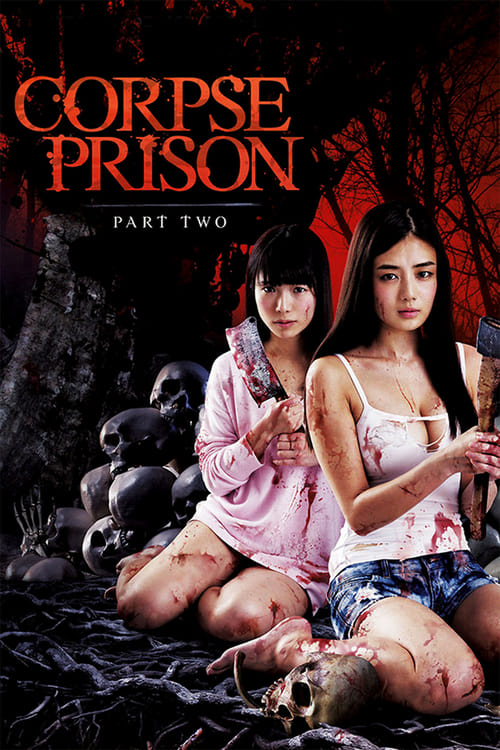
Corpse Prison: Part 2
Plot
They thought they were coming to study a mysterious town hidden in the mountains of Japan. Instead, they’ve discovered that their Professor brought them to Yasaka for a much darker purpose. Now Mikoto and the other girls are trapped in a monstrous nightmare. As the villagers become increasingly more insane, the college students find themselves at the center of arcane rituals focused on blood and rotting flesh. Their only chance is to escape, but their captors are far too numerous and know the lay of the local land far too well.
Get the Weekly Woke Watchlist
New and trending movies scored for woke bias, preachy messaging, and forced political themes — before you waste your evening.
No spam. One useful email per week.
Overall Series Review
Categorical Breakdown
The movie is a Japanese production set in Japan with Japanese characters, meaning it does not engage with Western intersectional politics, vilification of whiteness, or historical race-swapping. The character conflict is purely based on the classic horror dynamic of city outsiders trapped by evil, insane rural cultists. Characters are judged by their roles in the survival plot, not by immutable characteristics.
The traditional, isolated culture and heritage of the Yasaka village are portrayed as fundamentally corrupt, insane, and evil due to an active supernatural curse. The narrative requires the student characters to escape and destroy this small, traditional community and its ancestors' practices, aligning with the deconstruction of heritage.
The main protagonists are women, Mikoto and the other girls, who are the primary targets of the village's cruelty and rituals. The plot includes a rape scene and focuses heavily on female victimization, which raises the score by focusing on gender as a primary axis of assault. Male students reportedly attempt to protect their female companions in the first part, which presents a complementary rather than emasculated dynamic. The movie reportedly breaks the ‘final girl’ trope, but the nature of this break is not specified as a ‘Girl Boss’ victory.
The narrative makes no mention of centering alternative sexualities, gender ideology, or deconstructing the nuclear family. The structure is entirely focused on a traditional horror conflict between trapped students and a cult, maintaining a normative structure as the backdrop to the violence.
The horror plot is driven by 'arcane rituals' and features a 'priest at the temple' as a key figure in the mystery and corruption. This framing suggests that the institution of local, traditional religion (represented by the temple and priest) is the source or vessel for the village's evil, aligning with the idea of traditional religion being the root of evil. The existence of a 'real' curse, however, acknowledges a transcendent, albeit evil, spiritual reality, which tempers the score from a pure moral relativism ten.
Get the Weekly Woke Watchlist
New and trending movies scored for woke bias, preachy messaging, and forced political themes — before you waste your evening.
No spam. One useful email per week.