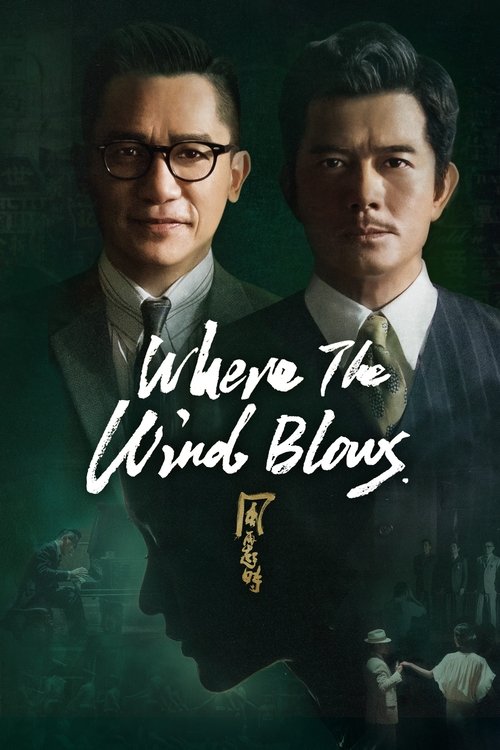
Where the Wind Blows
Plot
The decades spanning story of two very different policemen who rise to power in Hong Kong during British rule, and end up at odds with both organised crime groups and the anti-corruption unit vowing to bring them down.
Get the Weekly Woke Watchlist
New and trending movies scored for woke bias, preachy messaging, and forced political themes — before you waste your evening.
No spam. One useful email per week.
Overall Series Review
Categorical Breakdown
The main characters, the corrupt police sergeants, are East Asian men in a historically authentic Hong Kong setting. The core conflict is not based on race or intersectional hierarchy but on individual moral collapse and greed. Character arcs depict a descent from idealistic integrity to power-hungry cynicism, judged purely by the content of their actions. The casting is historically authentic, and there is no evidence of race-swapping or forced diversity.
The setting is British colonial Hong Kong, and the narrative critiques the institutional corruption that became rampant under that system, specifically the police force. While this involves a Western-controlled administration, the critique is focused on a specific, historically verifiable institutional failure (corruption leading to the formation of the ICAC) rather than a general vilification of 'Western civilization' or 'Western ancestors.' It is a Hong Kong production that examines its own troubled history.
The story centers on the ambition of the male protagonists. Female characters are influential within the crime and social world, such as the wife of a protagonist who is 'quite capable of helping her husband's shady business.' This role grants a woman power, but within a traditional crime narrative of a powerful crime boss's wife, not as a 'Girl Boss' designed to lecture on female superiority. Infidelity and betrayal are depicted as consequences of male ambition, and the main gender dynamics are based on complex, flawed relationships, not the emasculation of all men or an anti-natalist message.
The core relationships and sexual dynamics revolve around traditional male-female pairings, including marriage, former flames, and infidelity. The narrative does not center alternative sexualities, deconstruct the nuclear family as an 'oppressive' construct, or engage with contemporary gender ideology. Sexuality is treated as a private matter relevant to the crime drama's plot about personal lives and deceit.
The film depicts a morally ambiguous world where the protagonists operate in a vacuum of personal ethics, committing greed, corruption, and violence. The focus is on the moral relativism and nihilism of crime and power, but this is a common trope in the crime genre. There is no evidence of active hostility toward traditional religion, a direct vilification of Christian characters, or a plot designed to declare religion the root of all evil. The morality is subjective in a purely human, crime-world context.
Get the Weekly Woke Watchlist
New and trending movies scored for woke bias, preachy messaging, and forced political themes — before you waste your evening.
No spam. One useful email per week.