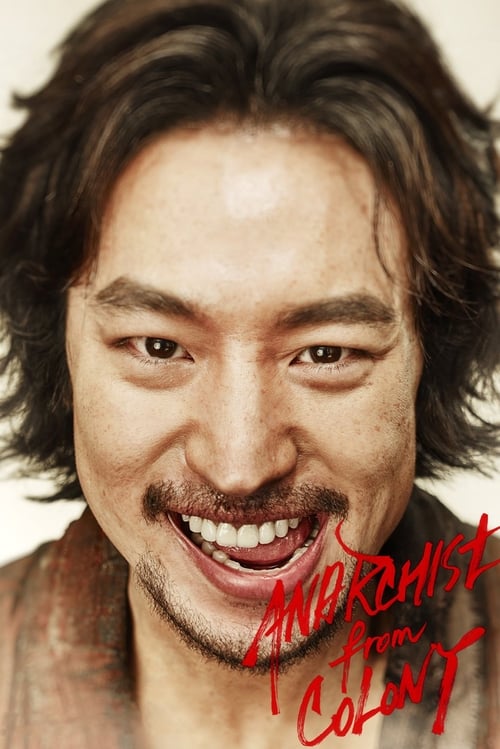
Anarchist from Colony
Plot
Based on the life of the Korean anarchist Park Yeol, the film shows his struggle to counter the massacre of Koreans by the government during the 1923 great Kanto earthquake, focusing on his activities as the leader of the anti-Japanese organization Bulryeongsa and his relationship with Japanese comrade Fumiko Kaneko.
Get the Weekly Woke Watchlist
New and trending movies scored for woke bias, preachy messaging, and forced political themes — before you waste your evening.
No spam. One useful email per week.
Overall Series Review
Categorical Breakdown
The plot is fundamentally built on an intersectional hierarchy: the oppressed colonized Koreans and the marginalized poor Japanese against the powerful Japanese Imperial state. The Korean protagonist’s struggle is defined by his ethnic identity and colonial status, making the narrative a lecture on systemic oppression. The film's primary conflict is a national/ethnic power dynamic where the ruling group (Japanese Imperial officials) are shown to be evil, corrupt, and orchestrating the massacre of a minority group (Koreans).
The film champions a core ideology of political Anarchism, which is a total deconstruction of state and traditional institutions. The Japanese co-protagonist, Fumiko Kaneko, is an explicit nihilist who rejects her own country, culture, and family, positioning her as a heroic figure for her civilizational self-hatred toward the Japanese Empire. Her rejection of her home nation makes her morally and spiritually superior in the narrative, while the Korean main character champions his own (oppressed) heritage as an act of resistance, which prevents a perfect 10 score.
Fumiko Kaneko is presented as an equally strong, highly intelligent, and politically motivated comrade to Park Yeol, not merely a girlfriend. The director of the film explicitly states that the relationship, based on common anarchist ideas, is related to 'modern-day feminism' and views the pair as 'comrades'. She acts as the 'linchpin' of the narrative and is a powerful, anti-authoritarian 'Girl Boss' who rebels against the Japanese patriarchy and state. The anti-establishment ideology is inherently anti-family and ignores the themes of motherhood/natalism in favor of revolutionary action.
The primary relationship is a heterosexual one between Park Yeol and Fumiko Kaneko. The film's focus is on political anarchism and ethnic conflict, not sexual identity or gender ideology. The deconstruction of the nuclear family is only implicit through the characters’ radical anarchist lifestyle, but the film does not center or lecture on alternative sexualities or transitioning, keeping the score very low.
The main ideology driving the protagonists is **Anarchism and Nihilism**, which fundamentally rejects all transcendent authority and traditional moral structures. The core conflict operates on a subjective morality where the protagonist's plot for assassination and revolution is considered a righteous act against the 'power dynamics' of the oppressive state. The moral foundation of the film is entirely secular and political, portraying a spiritual vacuum and treating 'truth' and 'morality' as tools in a political and judicial power struggle, even without explicit vilification of Christianity.
Get the Weekly Woke Watchlist
New and trending movies scored for woke bias, preachy messaging, and forced political themes — before you waste your evening.
No spam. One useful email per week.