Manto
Plot
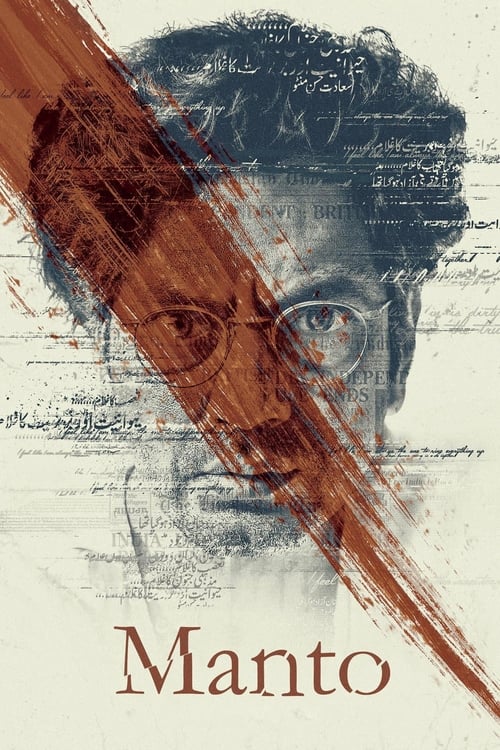
In Bombay's seedy-shiny film world, Manto and his stories are widely read and accepted. But as sectarian violence engulfs the nation, Manto makes the difficult choice of leaving his beloved Bombay. In Lahore, he finds himself bereft of friends and unable to find takers for his writings.
Get the Weekly Woke Watchlist
New and trending movies scored for woke bias, preachy messaging, and forced political themes — before you waste your evening.
No spam. One useful email per week.
Overall Series Review
Categorical Breakdown
The plot's central tragedy is the forced subjugation of Manto’s merit (as a great writer) to his immutable characteristic (Muslim identity). The story exists to illustrate how sectarian hatred, fanned by political division, forces a non-practicing Muslim to suddenly become conscious of his religious identity as a vulnerability. The villainous force is the pervasive communalism that destroys the meritocratic and secular spirit of Bombay. The narrative directly lectures on the systemic oppression of religious minorities during the Partition and the vilification of the 'other' (Hindu vs. Muslim).
The film does not target Western civilization but portrays a profound, localized form of civilizational self-hatred through the lens of Partition. The story explicitly critiques the newly formed nations of India and Pakistan, showing how the religious-nationalist project destroyed the shared heritage and cosmopolitan spirit of cities like Bombay. The ending, featuring the writer’s allegorical critique of the border itself, directly deconstructs the new nation-states. The ancestors' sacrifices are viewed as having been betrayed by the very people who inherited the land.
The male protagonist, Manto, is shown as deeply flawed: an alcoholic, self-absorbed artist, and an imperfect husband and father. His wife, Safia, is portrayed as the practical, emotionally stable, and moral center of the family who endures his decline and maintains the household. Manto's literary work is celebrated for giving voice to complex, strong-willed, and sexually aware women, and the narrative places him as a 'feminist ahead of his time' for opposing the commodification and abuse of women during the riots. This dynamic elevates the female role to a point of consistent moral and emotional superiority over the main male character, leaning toward the 'Girl Boss' trope, although the characters are complex and the marriage is shown as a deeply committed partnership.
The narrative maintains a normative structure, focusing on the heterosexual marriage of Manto and his wife and their children. There are no elements that center on alternative sexualities, deconstruct the nuclear family, or lecture on gender ideology. A passing scene referencing Manto's 'feminine feet' is a subtle character detail but is not used to push a 'Queer Theory' lens on the wider plot.
The core message is an explicit condemnation of religious zealotry and fanaticism as the root of communal violence, which is the engine of the entire conflict. Manto, a humanist, is persecuted by the courts for obscenity, with the charges driven by conservative religious morality on both sides of the border. Manto’s defense of 'truth' and 'freedom of expression' against what he views as the hypocrisy of a religious society champions a secular/humanist, transcendent morality in opposition to traditional, institutionalized religious law. This is a high score because the film portrays traditional religion, when politicized, as the primary source of evil and oppression.
Get the Weekly Woke Watchlist
New and trending movies scored for woke bias, preachy messaging, and forced political themes — before you waste your evening.
No spam. One useful email per week.