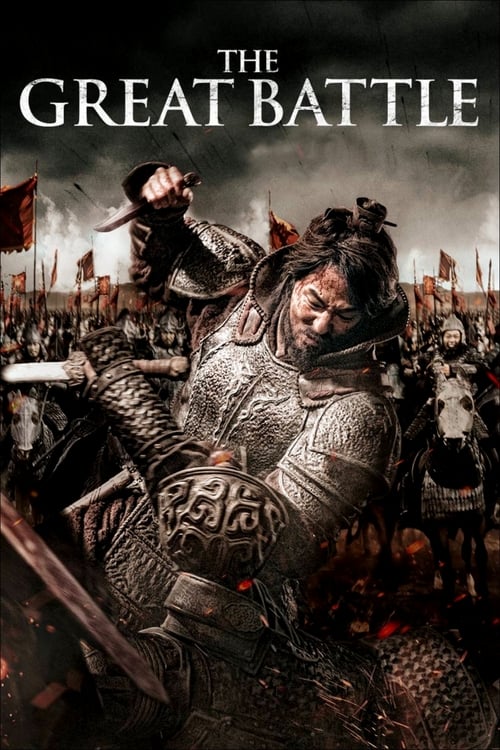
The Great Battle
Plot
Kingdom of Goguryeo, ancient Korea, 645. The ruthless Emperor Taizong of Tang invades the country and leads his armies towards the capital, achieving one victory after another, but on his way is the stronghold of Ansi, protected by General Yang Man-chu, who will do everything possible to stop the invasion, even if his troops are outnumbered by thousands of enemies.
Get the Weekly Woke Watchlist
New and trending movies scored for woke bias, preachy messaging, and forced political themes — before you waste your evening.
No spam. One useful email per week.
Overall Series Review
Categorical Breakdown
The movie is a national historical epic focused on the defense of the Goguryeo kingdom against the Tang Dynasty. The entire cast is of East Asian descent, and the conflict is purely geopolitical and cultural, not based on modern intersectional identity politics. Characters like General Yang Man-chun are universally praised for their courage and strategic merit regardless of their internal political standing, embodying a universal meritocracy.
The central conflict is the defense of the Ansi Fortress and the Goguryeo homeland from a massive foreign invasion. The narrative is a strong expression of patriotism and gratitude for the sacrifices made by ancestors to preserve the civilization, which is the direct opposite of civilizational self-hatred. Institutions like the fortress and the nation are presented as vital shields against chaos and foreign conquest.
Male characters occupy all command roles and are consistently depicted as capable, strategic, and heroic protectors. The film features a detachment of female crossbow operators and the 'lady-warrior' Baek-ha, demonstrating that women fight in times of total war. However, they are not portrayed as 'Mary Sues' who are instantly better than all men, and Baek-ha has a relationship subplot with a male cavalry officer, which maintains a complementary gender dynamic. There is no anti-natalist or anti-family messaging.
No LGBTQ+ characters, themes, or commentary on gender theory are present in the narrative. The structure is entirely normative, focusing on traditional military and community dynamics, including the standard male-female pairing in romantic subplots.
The setting is ancient East Asia, making anti-Christianity irrelevant. The narrative celebrates virtues like courage, sacrifice, and loyalty to one's home, which are rooted in a transcendent moral framework of duty and honor. There is no embrace of moral relativism; the invasion is clearly portrayed as an objective wrong to be resisted through righteous strength and faith in their defense.
Get the Weekly Woke Watchlist
New and trending movies scored for woke bias, preachy messaging, and forced political themes — before you waste your evening.
No spam. One useful email per week.