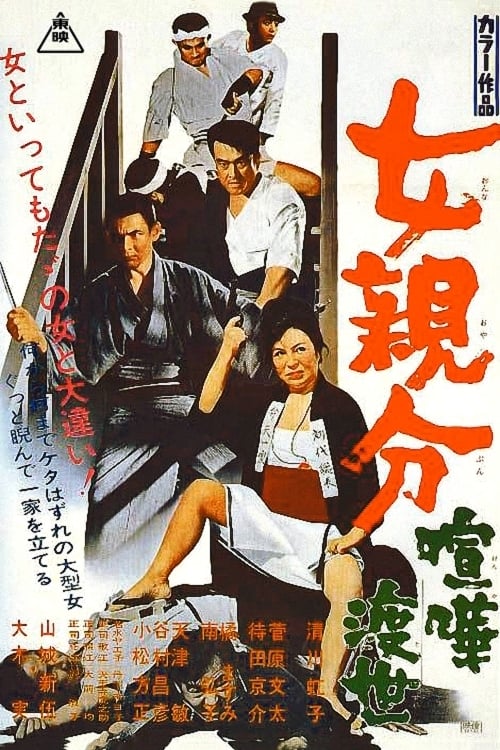
Woman Boss: Chivalrous Fight
Plot
Sumi Muraoka, nicknamed "Sumi Banten", due to the fact that her back is decorated with a tattoo of the goddess Banten, the woman who heads the Banten Yakuza family. She comes into confrontation with a powerful of Yakuza group Mutsumi-kai, seeking to capture all power in their hands.
Get the Weekly Woke Watchlist
New and trending movies scored for woke bias, preachy messaging, and forced political themes — before you waste your evening.
No spam. One useful email per week.
Overall Series Review
Categorical Breakdown
The entire cast and setting are Japanese and the plot is an internal conflict within the Yakuza. Race-based intersectional politics and the vilification of 'whiteness' are absent from the film's premise. Character conflict focuses on power, honor, and criminal rivalry.
The film is an internal critique of the corruption within the criminal Yakuza subculture, not a condemnation of core Japanese society or its ancestors. The Yakuza code of *ninkyō* (chivalry) is often framed as a moral standard that characters must uphold against chaotic forces, respecting a traditional, albeit criminal, structure.
The protagonist is the 'Woman Boss' who heads a Yakuza family, directly challenging male authority in a traditionally masculine, powerful criminal organization. This highly visible 'Girl Boss' trope involves a female lead who is instantly capable of commanding and fighting a large male organization. The plot centers on a career of power and violence over family life, but the goal is criminal dominance, not a lecture on female perfection or the systemic emasculation of all men.
The narrative focus is on criminal power struggle, violence, and sexualized content common to the exploitation genre. There is no evidence that the film centers an alternative sexual ideology, deconstructs the nuclear family through theory, or lectures on gender identity. The structure adheres to a normative dramatic conflict between the female lead and the male-led rival group.
The protagonist's tattoo and nickname, 'Sumi Banten,' references the Buddhist-Shinto goddess Benzaiten, incorporating a spiritual symbol of authority directly into her identity. The Yakuza’s 'chivalry' code serves as a strict, albeit criminal, higher moral law for the characters. There is no hostility toward religion or promotion of moral relativism; the moral framework is objective truth within the code of duty and honor.
Get the Weekly Woke Watchlist
New and trending movies scored for woke bias, preachy messaging, and forced political themes — before you waste your evening.
No spam. One useful email per week.