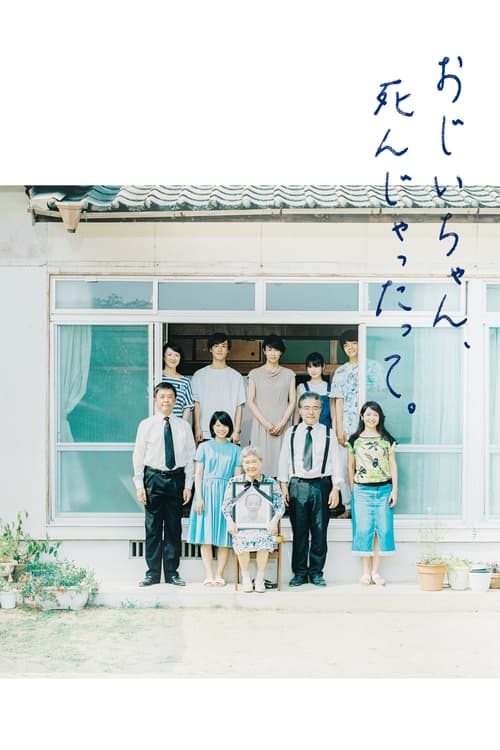
Goodbye, Grandpa!
Plot
A 20 something girl Yoshiko is having sex with her boyfriend when a shocking telephone call arrives - grandpa has passed away. The lightning from clear sky doesnt derail only the life of Yoshiko but summons the rest of the dysfunctional Haruno family to the ancenstral country house to pay their respects to the deceased - and unleash their quarrels between themselves and with the world at large.
Get the Weekly Woke Watchlist
New and trending movies scored for woke bias, preachy messaging, and forced political themes — before you waste your evening.
No spam. One useful email per week.
Overall Series Review
Categorical Breakdown
The film is a Japanese production focused entirely on a Japanese family's internal strife and the complexities of their own society, making the category of race-based intersectional hierarchy irrelevant. Characters are judged by their actions and personality flaws within the family unit, not by immutable characteristics or systemic oppression lectures. No instances of 'race-swapping' or 'vilification of whiteness' are present.
The film critiques aspects of contemporary Japanese society, such as issues with middle-aged employment, modern family structures, and how traditions are performed. This is an internal cultural critique and is part of the traditional family drama genre. It does not frame the home culture as fundamentally corrupt or racist, nor does it demonize the ancestors—the grandfather is recalled as strict but having mellowed out. The story concludes with the family attempting to move forward together.
The gender dynamics are heavily skewed toward female competence and male incompetence, aligning closely with 'Girl Boss' tropes and male emasculation. The two central male figures (the brothers) are described as bumbling, childish, drunk, and defined by their professional failures or social awkwardness. The women in the family are consistently portrayed as the 'straight-talking and clear-headed' individuals who serve as the emotional and moral centers of the story, with the female protagonist as a 'beacon of sanity.'
The narrative is strictly focused on a traditional, if dysfunctional, male-female pairing and extended nuclear family structure. There is no introduction of alternative sexualities, deconstruction of the nuclear family as an oppressive structure, or any elements of gender ideology. Sexuality is treated privately, as seen with the protagonist's opening scene and subsequent guilt.
The film is set around a traditional Japanese funeral, touching on 'religion' and the ceremonies involved. The protagonist's personal conflict is one of existential guilt over life and death, but this is a private, emotional struggle, not a vehicle for attacking established faith. The narrative ultimately follows a moral arc of familial reconciliation and moving forward, acknowledging objective emotional and spiritual truths rather than advocating for moral relativism.
Get the Weekly Woke Watchlist
New and trending movies scored for woke bias, preachy messaging, and forced political themes — before you waste your evening.
No spam. One useful email per week.