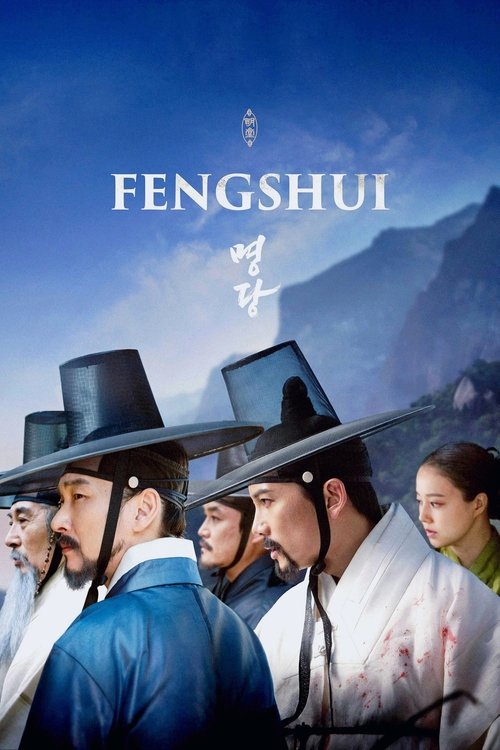
Feng Shui
Plot
Park Jae-sang was a royal geomancer, who helps people designate propitious site for houses, store and even graves under the belief that a grave in a good site will bring future fortune for descendants. But he loses his family because he exposed a conspiracy about crown Prince's grave site. Park Jae-sang plans to make a revenge of his family and learns that there is a much bigger conspiracy about propitious grave site; the place that would make grave owner's son the King of Joseon.
Get the Weekly Woke Watchlist
New and trending movies scored for woke bias, preachy messaging, and forced political themes — before you waste your evening.
No spam. One useful email per week.
Overall Series Review
Categorical Breakdown
The plot is entirely focused on a power struggle between internal Korean factions—a corrupt aristocratic clan versus the loyalists of the royal family—based on political maneuvering and class, not race or forced diversity. Characters are defined by their actions and place within the historical Joseon hierarchy.
The movie does not express hostility toward Korean civilization; rather, it details a struggle to save the nation from a powerful, corrupt internal clan by restoring the rightful political order. The narrative highlights Korean culture and traditions, like geomancy, and criticizes the corruption of that tradition, not the culture as fundamentally racist or corrupt.
The core dramatic impetus is the male protagonist's revenge for the loss of his wife and child, validating the nuclear family as a vital institution. The political conflict centers on male-line royal succession. While a main female character exists, the narrative framework is a patriarchal political thriller that celebrates family and masculine, protective drive.
The movie is a historical period piece focused on traditional royal bloodlines, succession, and the nuclear family unit. There is no presence of centered alternative sexualities, gender ideology, or deconstruction of the normative male-female structure.
The film centers around the traditional belief system of geomancy (pungsujiri). While it criticizes the malicious political *abuse* of this belief system by the villains, the narrative relies on the idea of an objective cosmic force (fate, good land) and moral choices (power-seeking versus rational action), suggesting a belief in transcendent morality. There is no specific anti-Christian sentiment.
Get the Weekly Woke Watchlist
New and trending movies scored for woke bias, preachy messaging, and forced political themes — before you waste your evening.
No spam. One useful email per week.