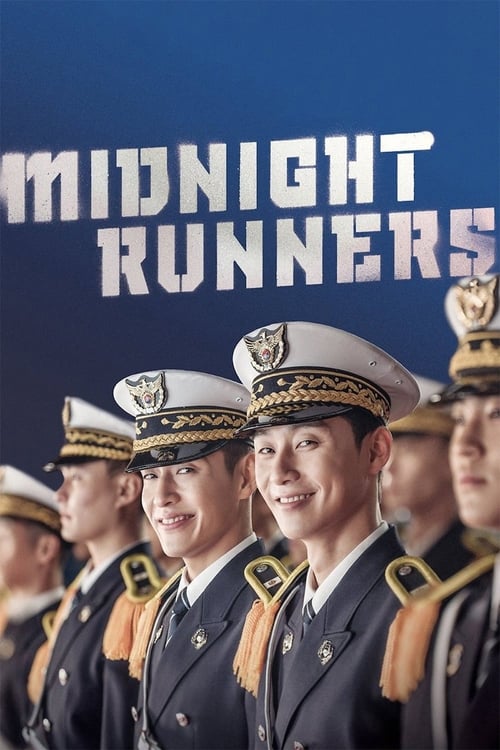
Midnight Runners
Plot
Two apathetic police academy recruits who become best buddies through the tough training together witness a woman being abducted right before their very eyes. As they were taught in the academy, they quickly report the incident to the police, but the police are in no hurry to jump on the case. So the duo decide to take the matter into their own hands and rescue the woman.
Get the Weekly Woke Watchlist
New and trending movies scored for woke bias, preachy messaging, and forced political themes — before you waste your evening.
No spam. One useful email per week.
Overall Series Review
Categorical Breakdown
The movie's plot centers the villains as an organized crime group identified as Chinese-Koreans (*joseonjok*), which has been critiqued for stereotyping an ethnic minority group as the source of social evil and corruption. The film received an apology verdict in court regarding the ethics of its minority representation. The heroes, however, are judged purely by the merit of their moral choice and actions to save lives rather than their background.
The narrative does not frame the home culture or nation as fundamentally corrupt; instead, it provides a specific, pointed critique of the institutional apathy and class bias within the police bureaucracy. The young male protagonists act as a corrective force, risking their own careers to uphold the core value of justice and protecting citizens, embodying an aspirational ideal for the police and state.
The film features two male leads who are initially immature but grow into protective, heroic figures dedicated to rescuing female victims from a brutal organ-trafficking and illegal egg-harvesting operation. This villainous act is inherently anti-natal, making the protagonists' fight a defense of female sanctity and life itself. The men are not emasculated, proving their worth through courage and physical capability. The female victims are victims of a crime, not 'Girl Boss' figures, and the only prominent female authority figure is a tough, no-nonsense police instructor who ultimately shows a protective sense of trust in the protagonists.
The primary relationship is a 'bromance' between the two male protagonists, but the dialogue explicitly shows them attempting to find female companionship. The narrative structure is entirely normative, focusing on a traditional male-female pairing as the standard. There is no presence of alternative sexualities, gender ideology, or deconstruction of the nuclear family.
The core morality of the story is based on an objective commitment to justice and the value of human life, which supersedes the bureaucratic rules of the police system. The movie does not feature any religious themes or anti-theistic messaging; the central conflict is purely a secular, moral struggle against institutional corruption and heinous crime.
Get the Weekly Woke Watchlist
New and trending movies scored for woke bias, preachy messaging, and forced political themes — before you waste your evening.
No spam. One useful email per week.