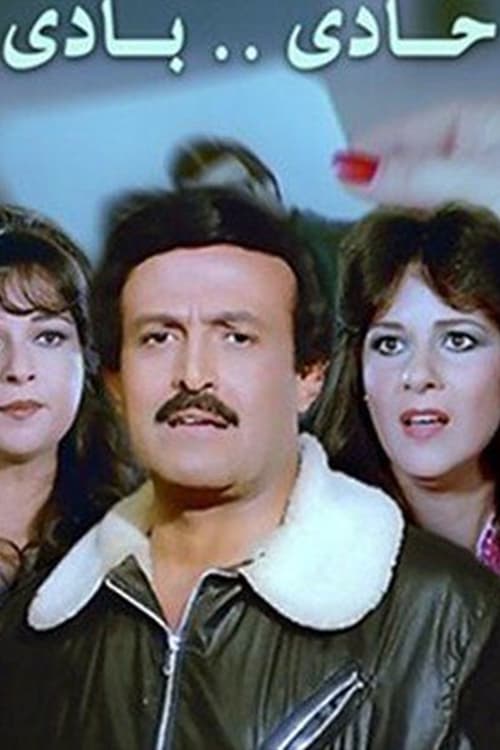
Hadi Badi
Plot
Dr. (Saber) returns from abroad after completing his studies, accompanied by his wife, Dr. (Laila). He agrees with her to hide their marriage from his family. He agrees with his uncle (Khader) to marry his daughter (Sobhiya). Dr. (Jalal), Laila’s uncle, sympathizes with (Saber). He advises him to marry Subhiya out of fear for his uncle's health, and events escalate.
Get the Weekly Woke Watchlist
New and trending movies scored for woke bias, preachy messaging, and forced political themes — before you waste your evening.
No spam. One useful email per week.
Overall Series Review
Categorical Breakdown
The film’s conflict is entirely based on a clash between individual choice and family tradition (cousin marriage) within a singular culture (Egyptian). The characters are judged by their actions (Saber's deceit) and their social roles (Doctor, Wife, Uncle), not by race or intersectional hierarchy. The narrative is culturally specific and does not engage in vilification of 'whiteness' or systemic oppression.
The central conflict does not frame Egyptian home culture as fundamentally corrupt or racist, but rather critiques a specific aspect: the tradition of arranged/cousin marriage. Dr. Saber's education 'abroad' (London) introduces modern values into the conflict, but the film is a critique of a specific custom, not a condemnation of the entire civilizational heritage, preventing it from reaching a high level of self-hatred.
Both the male lead (Saber) and the female lead (Laila) are highly educated professionals ('Dr.'), giving Laila the 'Girl Boss' status of competence and career fulfillment. Saber is portrayed as bumbling, weak, and deceitful for agreeing to the cover-up and succumbing to his family's pressure. While Laila is a professional, the conflict is over marriage and family, not the rejection of motherhood or the nuclear family itself.
The entire plot revolves around traditional, heterosexual marriage (Saber and Laila) being hidden to facilitate a second, traditionally expected heterosexual marriage (Saber and Sobhiya). The story reinforces the traditional nuclear family as the normative social structure, and there is no presence of alternative sexualities, gender ideology, or deconstruction of the family unit.
The core moral issue is one of honesty, family duty, and the moral consequence of deceit, framed by familial and cultural honor. There is no hostility or critique of organized religion, no demonization of spiritual leaders, and no promotion of subjective moral relativism. The narrative implicitly acknowledges a higher moral law concerning duty and truth.
Get the Weekly Woke Watchlist
New and trending movies scored for woke bias, preachy messaging, and forced political themes — before you waste your evening.
No spam. One useful email per week.