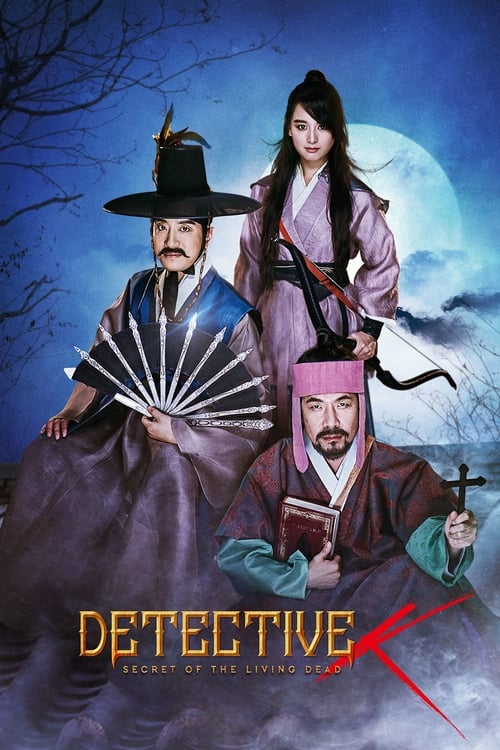
Detective K: Secret of the Living Dead
Plot
When a series of murders occur in Kanghwa Island, Detective K and his partner are once again called upon to solve the case. Along the way, he teams up with a beautiful woman with amnesia and together they discover Vampire bite marks on all the bodies. As they investigate further, they realize that the woman is somehow closely connected to the deaths.
Get the Weekly Woke Watchlist
New and trending movies scored for woke bias, preachy messaging, and forced political themes — before you waste your evening.
No spam. One useful email per week.
Overall Series Review
Categorical Breakdown
The movie is set in 18th-century Joseon Korea and features an entirely Korean cast, focusing on an internal conflict rooted in dynastic political conspiracy and historical class distinction. The narrative does not employ an intersectional lens and lacks any critique or vilification of 'whiteness' or forced diversity.
The film is a product of South Korean cinema and its setting is historical Korea (Joseon Dynasty). Any critique present is directed at the corruption and class systems within the historical Korean government. The movie exhibits no hostility toward Western civilization, its home, or its ancestors, which are the core criteria for this category.
The female character, Wol-young, is a powerful figure with supernatural abilities who is central to the entire mystery, carrying key action and dramatic scenes. She is a strong presence and was formerly a Crown Princess. However, the male leads, Detective K and his partner, are the established heroes and the film’s central comedic and intellectual force. The dynamic is a mix of a strong female figure with a traditional romantic subplot, stopping short of depicting men as bumbling idiots or pushing an anti-natalist 'Girl Boss' ideology.
The narrative centers on a traditional male-female romantic pairing between the detective and the mysterious woman. The story's focus is on mystery and political revenge. No centering of alternative sexualities, deconstruction of the nuclear family, or lecturing on gender ideology is present in the plot.
The conflict incorporates supernatural elements like vampires and zombies as a device for a political mystery, not as a critique of religion. The film is set in a Joseon-era context where the dominant spiritual frameworks are Confucianism and Buddhism, and no hostility toward Christianity or embrace of moral relativism as a main theme is detectable.
Get the Weekly Woke Watchlist
New and trending movies scored for woke bias, preachy messaging, and forced political themes — before you waste your evening.
No spam. One useful email per week.