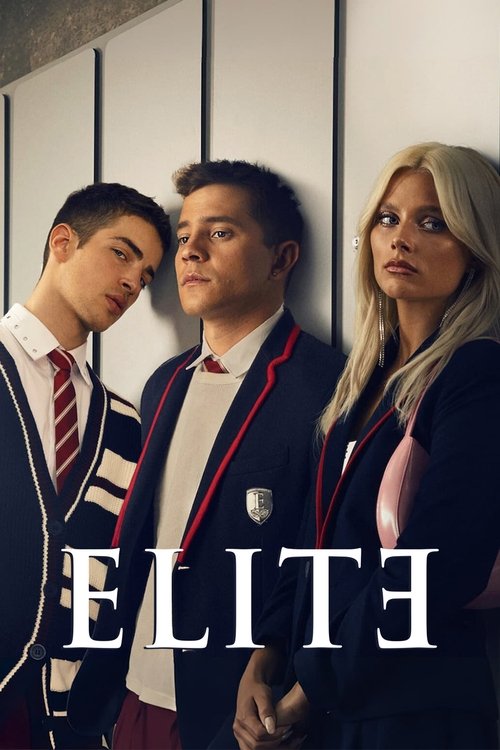
Elite
Season 6 Analysis
Season Overview
Everybody's looking for something this year at Las Encinas, whether it's love, revenge or millions of followers. But will they all make it out alive?
Season Review
Categorical Breakdown
The season explicitly focuses on systemic issues, including racism and LGTBI-phobia, framing the entire institution as corrupt and needing correction by the activist students. New and established characters are defined by their immutable characteristics and their relationship to systemic oppression and privilege. Discussions center on who is 'Black enough' based on socioeconomic standing and who is 'transphobic' for challenging identity norms, positioning the narrative to lecture on intersectional hierarchy. White male characters are predominantly portrayed as either violent assaulters, domestic abusers, or privileged, incompetent figures.
The central conflict involves the students actively standing up against a 'corrupted system' at their elite Spanish institution, Las Encinas. The previous generation, including wealthy parents and the school administration, is consistently depicted as the source of toxicity, violence, and moral failure, reinforcing the idea that the core institutions and established society are fundamentally rotten and must be torn down by the youth. There is no representation of gratitude or respect for Western/Spanish heritage, only deconstruction.
Female leads like Isadora take on the role of the moral protagonist, fiercely fighting for justice against male sexual assaulters. Other female characters, such as Mencía, successfully intervene in and expose a violent domestic abuse situation perpetrated by a male influencer. Female friendships are portrayed as supportive and empowering, while the primary male characters are often positioned as the source of toxicity, violence, or emotional incompetence, creating a clear 'Girl Boss' dynamic where women are the moral and capable saviors.
Sexual ideology is a core feature of the plot. The season introduces Nico, a transgender male student, whose desire to undergo hormone surgery and struggles with his identity are a major storyline. A significant narrative revolves around a gay footballer, Cruz, facing extreme and violent homophobia, which directly leads to tragedy. Sexual identity is the most important defining characteristic for several characters, and the narrative frequently incorporates lectures on transphobia and homophobia, centering queer theory and framing the traditional family structure as oppressive or absent.
Traditional religious faith is completely absent from the moral landscape, which operates on purely subjective ethics and a framework of social justice. The show embraces moral relativism where social power dynamics replace objective moral truth. While there is no explicit anti-Christian caricature, the entire world of the series functions within a spiritual vacuum, with characters only striving for justice through social activism rather than a transcendent moral code.