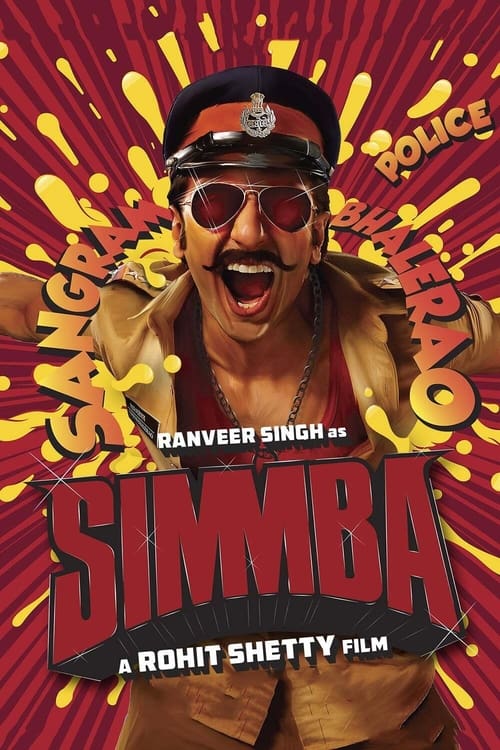
Simmba
Plot
A corrupt police officer enjoys all the perks of being an immoral and unethical police officer until an event which transforms his life completely and forces him to choose the righteous path.
Get the Weekly Woke Watchlist
New and trending movies scored for woke bias, preachy messaging, and forced political themes — before you waste your evening.
No spam. One useful email per week.
Overall Series Review
Categorical Breakdown
Characters are judged entirely by their moral character—the protagonist is a corrupt policeman, and the villain is an evil gangster. The narrative centers on an individual’s moral path from amorality to righteous heroism, a classic story of universal meritocracy where the content of the soul determines value, not immutable characteristics. The film exists within a strictly local, Indian context with no global or intersectional lens applied to the conflict.
The film does not criticize the nation or 'Western civilization' as fundamentally flawed; instead, it criticizes corruption within the judicial and political system. The story's ultimate message is a patriotic, 'jingoistic' call for a heroic figure to redeem and restore honor to the police force and the institution of justice. It respects the idea of an honorable system (represented by the cameo of the previous hero, Singham) that must be protected, which aligns with gratitude for national institutions.
The film actively works against the 'Girl Boss' trope by depicting female characters in traditional, secondary roles. The romantic interest serves as 'eye candy' and appears only briefly in songs and domestic settings. The pivotal female character is a victim whose brutalization serves as the sole trigger for the male protagonist's transformation and crusade for justice. Women are portrayed as those who must be protected and avenged by a dominant, hyper-masculine savior.
The core relationships and structure are exclusively heteronormative, focusing on the male hero's romantic pursuit of a female character and his protective, familial connection to another young woman. The narrative does not include any alternative sexual ideologies, deconstruction of the nuclear family, or focus on gender identity.
The story is fundamentally a moral conversion arc from moral relativism (the protagonist's 'money is everything' motto) to the unwavering pursuit of objective good. The hero's journey is a search for higher moral law to correct a system that has become subjectively corrupt. The ultimate message champions transcendent morality and righteous vengeance over the amoral corruption he initially embraced, which counters a narrative of moral relativism.
Get the Weekly Woke Watchlist
New and trending movies scored for woke bias, preachy messaging, and forced political themes — before you waste your evening.
No spam. One useful email per week.