Cobra Kai
Season 5 Analysis
Season Overview
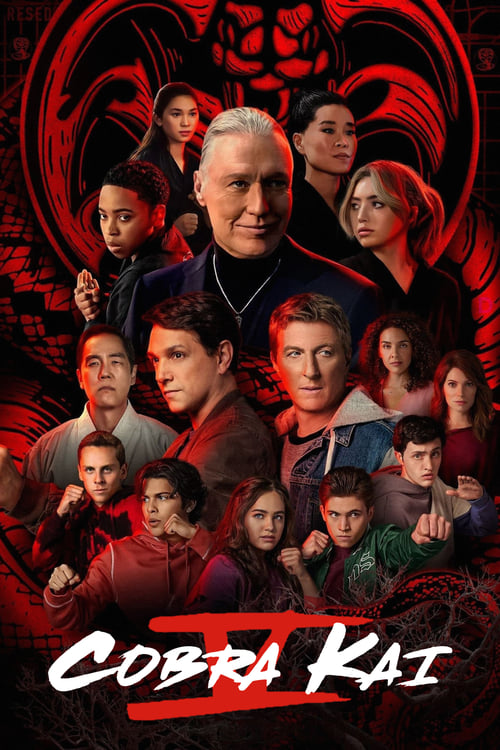
As Terry leads Cobra Kai into a new regime, Daniel, Johnny and an old ally join forces in a battle that goes way beyond the mat.
Season Review
Categorical Breakdown
The casting is naturally diverse, featuring prominent characters of color such as Miguel Diaz and his family (Latinx) and Chozen Toguchi (Asian). Characters are primarily defined by their moral choices, karate style, and personal history, adhering to a universal meritocracy of skill and character rather than a focus on immutable characteristics. The central villain, Terry Silver, is a wealthy white male, but his evil is rooted in psychopathy, manipulation, and moral corruption from his military past, not a critique of 'whiteness' or 'privilege'.
The narrative fundamentally rejects the category's criteria. The central moral struggle is the defense of the local community, family, and the inherited wisdom of Miyagi-Do (a positive, non-Western tradition) against the corrupting, expansionist, 'no mercy' philosophy of Cobra Kai. Johnny Lawrence's character arc emphasizes a redemption of a wayward American man, culminating in him actively embracing responsibility and fatherhood. Miguel's journey to find his biological father in Mexico reveals the father is a dangerous criminal, reinforcing Johnny, an American hero, as the superior, moral father figure.
Female characters like Sam and Tory are formidable fighters and central to the plot, but they are not 'Mary Sues' as their arcs are built around emotional struggle, trauma, and complex moral choices. They are portrayed as distinct from their male counterparts in their emotional responses and methods, leading to a complementary relationship between the genders, not an emasculation of males. The season features a strong, celebrated pro-natalist theme with Johnny and Carmen's unexpected pregnancy and the joy surrounding it, affirming family and motherhood.
The season maintains a normative structure, with the main adult and teenage relationships being male-female pairings. The primary focus is on resolving heterosexual relationship drama and building a traditional family unit for Johnny and Carmen. There is no presence of alternative sexual ideology, a focus on transitioning, or deconstruction of the nuclear family presented in the narrative.
The conflict is based on objective moral law and philosophical differences (Miyagi-Do's balance/defense vs. Cobra Kai's ruthless offense). The villains are clearly defined as morally evil. There is no anti-theistic messaging or explicit hostility toward religion; the show deals in a secular moral philosophy but upholds the concept of objective truth, moral right, and wrong, with characters finding strength in their moral code.