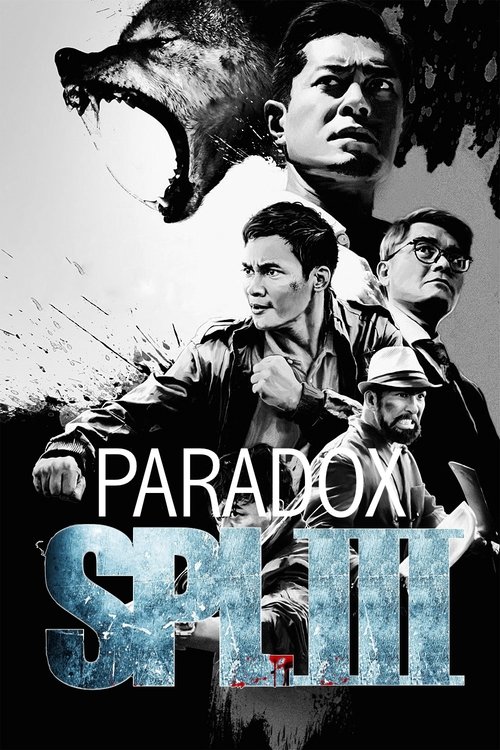
Paradox
Plot
When a Hong Kong police negotiator is informed about the sudden disappearance of his 16-year-old daughter in Thailand, he travels there to search for her whereabouts.
Get the Weekly Woke Watchlist
New and trending movies scored for woke bias, preachy messaging, and forced political themes — before you waste your evening.
No spam. One useful email per week.
Overall Series Review
Categorical Breakdown
The narrative is completely focused on the universal themes of crime, justice, and family loyalty. Character merit and moral integrity define the heroes (a Hong Kong cop, a Chinese Thai detective, a Thai policeman) and the villains (corrupt politicians and a ruthless gangster), not their race or immutable characteristics. The antagonist leading the trafficking ring is an American gangster, but his role is as the agent of evil in an international crime ring, not a vilification of a specific culture or 'whiteness.'
The film functions as a celebration of a man's devotion to his family, a foundational institution. The protagonists, who are a Hong Kong inspector and local Thai/Chinese detectives, are portrayed as virtuous figures upholding law and justice. The villains represent moral corruption that can exist anywhere, not an indictment or deconstruction of Western, Hong Kong, or Thai civilization. Institutions like the police and family are viewed as positive forces, even when navigating a corrupt system.
The core plot is driven by a father's protective masculinity. The primary heroic figures are all male, embodying strength, sacrifice, and justice. A secondary detective character has a heavily pregnant wife, which celebrates motherhood and family vitality. The daughter's initial motivation for traveling to Thailand—to have an abortion—is the single element that briefly touches on an anti-natal theme, but her subsequent status as a victim of a crime-for-profit scheme prevents the narrative from celebrating the 'choice' as empowerment. The focus remains on the male protector and avenger.
The story centers entirely on the nuclear family (father-daughter relationship) in crisis. The primary relationships and motivations are heterosexual and focused on the family unit, with a subplot explicitly featuring a couple awaiting the birth of their child. There is no presence, centering, or lecturing on alternative sexualities, gender ideology, or deconstruction of the traditional family structure.
The conflict is defined by an objective moral law: the deliberate murder and trafficking of innocent people for organ harvesting is absolute evil. The film establishes a clear, transcendent morality against the profound depravity of the villains. Justice, sacrifice, and revenge are treated as morally significant actions. There is no hostility toward religion and no spiritual vacuum; the world is instead governed by clear moral poles of profound good and profound evil.
Get the Weekly Woke Watchlist
New and trending movies scored for woke bias, preachy messaging, and forced political themes — before you waste your evening.
No spam. One useful email per week.