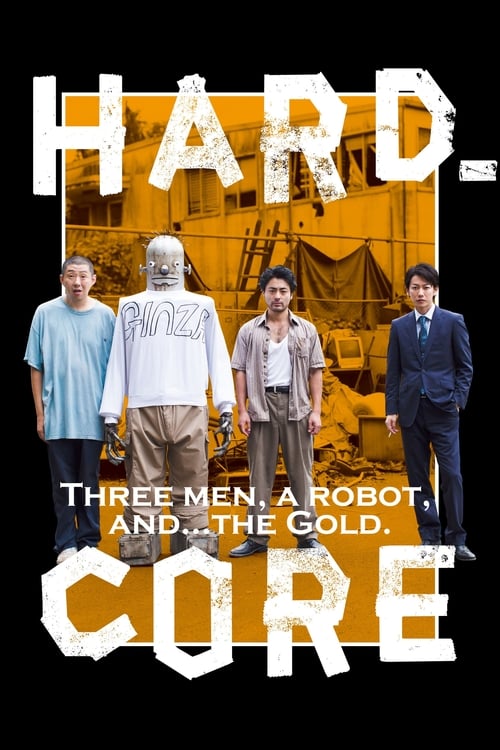
Hard-Core
Plot
The life story of a treasure hunter who lives in the countryside of Gunma in Japan. He is pure and kind, but has no communication skills and has a mind of his own. His sole friend is his co-worker. This man has never had sex. The friends find a robot one day. The robot wants to stay with the men. A bond is formed. The men resolve to change their lives.
Get the Weekly Woke Watchlist
New and trending movies scored for woke bias, preachy messaging, and forced political themes — before you waste your evening.
No spam. One useful email per week.
Overall Series Review
Categorical Breakdown
The movie operates entirely outside the framework of race or immutable characteristics. Character standing is determined by individual merit, specifically their purity of spirit, loyalty, and selflessness, contrasting them with the materialistic and exploitative nature of the 'outside world.' The main characters are social outcasts defined by their socioeconomic status and lack of communication skills, not intersectional identity. The central theme promotes universal meritocracy of the soul.
The film criticizes contemporary Japanese society for its materialistic values and its tendency to exploit 'losers' and social outcasts. This is a critique of modern corruption and systems, not a wholesale demonization of core cultural values, ancestors, or the civilization itself. One character works for an eccentric nationalist politician, suggesting a subtle critique of certain extreme traditionalist or financially-motivated nationalistic posturing, but the overall message is a call for righteousness against current corruption.
The story is a male-centric tale focused on brotherhood, male social isolation, and finding platonic connection with a male co-worker and a robot. The male characters are flawed, not 'toxic,' and their flaws (like the protagonist's temper) define their humanity, which is set against the world's corruption. There is no presence of 'Mary Sue' or 'Girl Boss' tropes, nor is there any anti-natal or anti-family messaging dominating the core themes.
The narrative makes no attempt to center or lecture on sexual ideology or gender theory. The focus is on platonic male-to-male relationships (brotherhood, friendship) and the male protagonist's virginity is noted as a personal detail, but not a political one. The structure remains normative by focusing on two brothers and their environment.
The core thematic struggle is between the protagonists' 'righteousness' and the world's 'depletion of the admiration for righteousness' and focus on 'materialistic pursuits.' This frames the conflict as one between an objective moral good (loyalty, care, selflessness) and a moral vacuum (corruption, exploitation), which aligns with the Transcendent Morality category. There is no anti-religious sentiment or vilification of spiritual figures.
Get the Weekly Woke Watchlist
New and trending movies scored for woke bias, preachy messaging, and forced political themes — before you waste your evening.
No spam. One useful email per week.