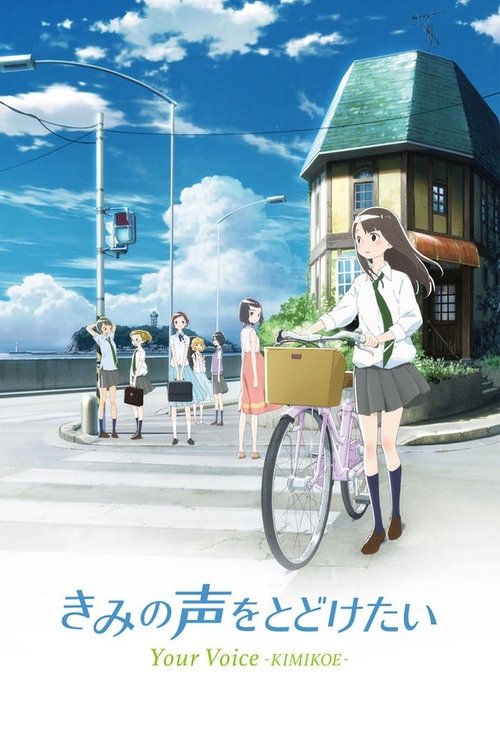
I Want to Deliver Your Voice
Plot
The story focuses on high school girl Nagisa Yukiai who lives in a seaside town. She has believed her grandmother's story that spirits dwell in words and they are called "kotodama" (word spirit). One day, she strays into a mini FM station that has not been used for years. As an impulse of the moment, she tries to talk like a DJ using the facility. But her voice accidentally broadcasted reaches someone she has never expected.
Get the Weekly Woke Watchlist
New and trending movies scored for woke bias, preachy messaging, and forced political themes — before you waste your evening.
No spam. One useful email per week.
Overall Series Review
Categorical Breakdown
The movie is a Japanese production set in a seaside town and features a racially uniform cast; it focuses on personal merit and the power of communication, not race, immutable characteristics, or intersectional hierarchy. No commentary or vilification of any demographic group is present. The casting is culturally authentic to its setting.
The plot's central conceit is a celebration of the unique Japanese spiritual belief of *kotodama* (word spirit), which Nagisa inherits from her grandmother. This act is one of cultural affirmation and respect for the local traditions, directly opposing hostility toward one's own home or ancestors.
The main cast is predominantly female high school students pursuing a common goal of running a radio station. While male characters are largely peripheral and function as plot facilitators, they are not actively depicted as toxic or bumbling idiots. The narrative celebrates female friendship and the importance of a maternal figure (trying to reach a friend's comatose mother), which runs counter to anti-natal or anti-family messaging.
The story adheres to a normative structure, dealing with high school friendships, personal aspirations, and the central issue of family connection. There is no evidence in the plot or commentary of centering alternative sexualities, deconstructing the nuclear family, or presenting gender ideology.
The entire premise rests on Nagisa's belief in *kotodama*, a transcendent, spiritual concept passed down from her grandmother. This treatment of the spiritual as real and impactful acknowledges a higher moral or mystical law, which serves as a source of strength, directly rejecting anti-theism and moral relativism.
Get the Weekly Woke Watchlist
New and trending movies scored for woke bias, preachy messaging, and forced political themes — before you waste your evening.
No spam. One useful email per week.