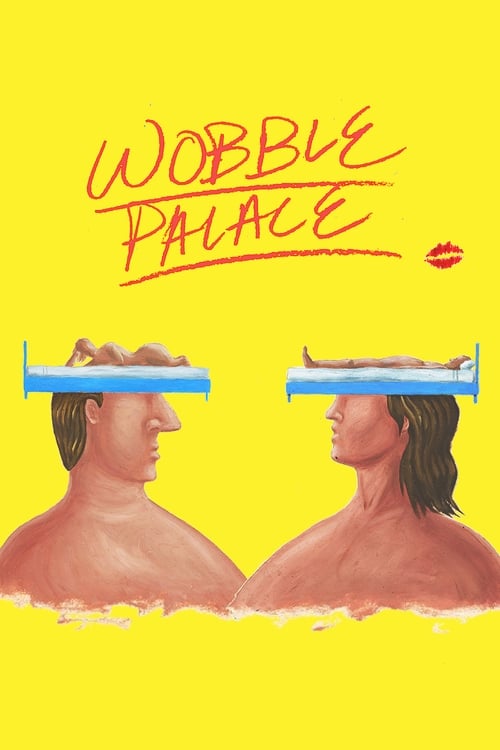
Wobble Palace
Plot
A couple on the verge of a nervous break-up decide to split their home over the weekend and test the waters of independence.
Get the Weekly Woke Watchlist
New and trending movies scored for woke bias, preachy messaging, and forced political themes — before you waste your evening.
No spam. One useful email per week.
Overall Series Review
Categorical Breakdown
The main male character, Eugene, is a 'faux-woke' white male depicted as a toxic, entitled, and inept misogynist who is publicly humiliated online, which is a direct execution of the 'whiteness is evil' trope. The narrative explicitly engages with concepts like 'cuck' and 'cisgender heterosexual male feminism.' One non-white character is also vilified for espousing Trump-supporting views and declaring he 'thinks like a white man,' linking white politics to toxicity regardless of race.
The film’s central conflict is the breakup of the couple and the deconstruction of their shared home, which is named 'Wobble Palace' and is filled with artificial set pieces. The setting is framed within the tumultuous American political climate of the 2016 election, but the critique focuses on millennial loneliness and narcissism rather than a sweeping condemnation of Western civilization or a demonization of ancestors. The characters' problems are personal and contemporary, not civilizational.
The core plot functions as a vindication of the 'happy break up,' explicitly rejecting the traditional relationship structure as a form of liberation. The male protagonist is presented as completely emasculated, a bumbling, emotionally dependent figure and a 'misogynist' whose attempts to date are pitiful failures. The female lead, an artist, pursues self-actualization and casual hookups, aligning with anti-natalist and anti-family messages, though she is portrayed as a flawed character rather than a perfect 'Girl Boss.'
The story centers on an 'open relationship' that is dissolving, fundamentally rejecting the nuclear family structure. The female protagonist's narration explicitly mentions 'identifying as queer' as a key part of her personal evolution away from the toxic male-female relationship. She is also described as 'bi-curious.' Sexual identity is a focal point of her individual journey and is framed as a reaction to oppressive heterosexual norms.
The moral framework of the movie is completely secular, focusing on personal anxiety, loneliness, and the superficiality of modern life and dating apps. There is no mention of traditional religion or faith, and no Christian characters are presented as villains or bigots. The morality is entirely subjective and relativistic to the characters’ hipster subculture, placing the film in a complete spiritual vacuum rather than one of active hostility toward theism.
Get the Weekly Woke Watchlist
New and trending movies scored for woke bias, preachy messaging, and forced political themes — before you waste your evening.
No spam. One useful email per week.