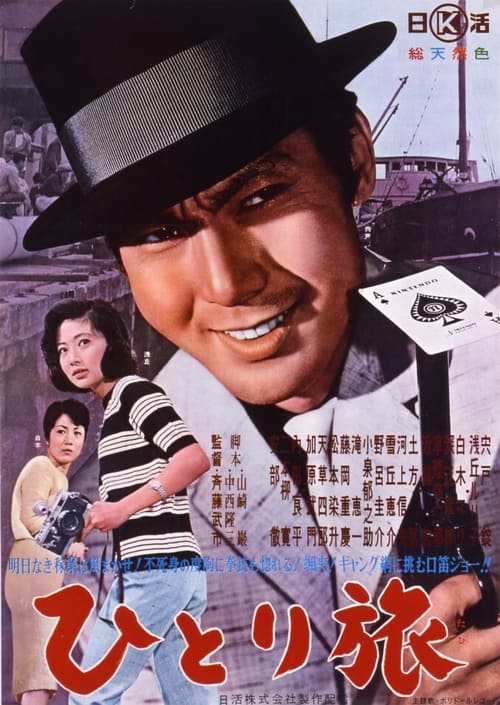
Hitori tabi
Plot
1962 Japanese movie
Get the Weekly Woke Watchlist
New and trending movies scored for woke bias, preachy messaging, and forced political themes — before you waste your evening.
No spam. One useful email per week.
Overall Series Review
Categorical Breakdown
The movie features an entirely Japanese cast for a Japanese audience. Character merit, loyalty, and conflict with the Yakuza/corrupt forces drive the plot. There is no forced diversity, no vilification of 'whiteness' (as the setting is not Western), and no focus on intersectional hierarchy.
The narrative's focus on a cynical crime setting critiques modern societal corruption and the criminal underworld, which is a mild, genre-typical self-critique. It does not demonize the core Japanese culture or ancestors in a civilizational self-hatred context. The main character often embodies a personal, if anti-social, code of honor.
As a classic hard-boiled Nikkatsu Action film, the story is heavily male-centric, focusing on the tough-guy protagonist Jo Shishido. Female characters exist in traditional supporting roles such as love interests or criminal associates. The narrative is entirely devoid of the "Girl Boss" trope, emasculation of males, or anti-natalist lecturing.
The genre and era of this film preclude the presence of any sexual or gender ideology. The structure adheres to a normative male-female pairing or focuses on a solitary male protagonist. There is no centering of alternative sexualities, no deconstruction of the nuclear family, and no lecturing on gender theory.
As a crime film, the plot's central conflict is amoral, operating outside of traditional law and faith, which leans toward situational ethics. This inherent trait of the genre suggests a functional moral relativism over an objective, transcendent moral law in the underworld setting, but it lacks direct hostility or lectures against organized religion.
Get the Weekly Woke Watchlist
New and trending movies scored for woke bias, preachy messaging, and forced political themes — before you waste your evening.
No spam. One useful email per week.