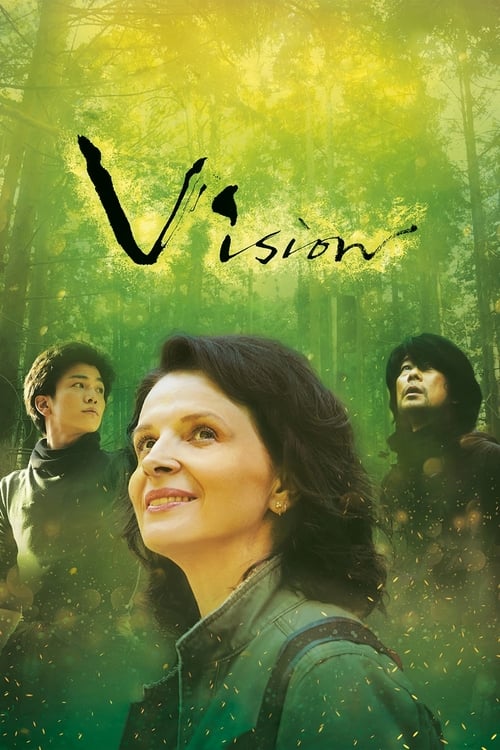
Vision
Plot
Centres on Jeanne, a journalist tracking a mysterious rare herb that appears only once every 997 years.
Get the Weekly Woke Watchlist
New and trending movies scored for woke bias, preachy messaging, and forced political themes — before you waste your evening.
No spam. One useful email per week.
Overall Series Review
Categorical Breakdown
The core conflict is not based on race or intersectional hierarchy. The protagonist is judged by her individual spiritual and emotional journey, not her immutable characteristics. The diverse casting of a French actress in a Japanese film is an artistic choice in the service of the story's east-meets-west theme, not a forced diversity mandate. Character merit and individual struggle are the driving forces.
The narrative explicitly contrasts the Western perspective, which is associated with 'linear time' and emotional anguish, with the Japanese forest culture. The Japanese setting and its ancient, nature-centric wisdom are positioned as spiritually and morally superior, offering the Western protagonist a path to peace that is antithetical to her own civilization's rationalist tradition. The film functions as an 'eco-fable' that suggests a critique of 'excessive civilization,' a common proxy for the West, in favor of a simpler, external culture.
The female protagonist, Jeanne, is the central figure who initiates the quest, demonstrating agency and ambition as a career woman/essayist. The film's major reveal involves Jeanne's choice to abandon her newborn child in the forest after the death of the father to pursue her own path and personal healing. This plot point frames the responsibility of motherhood and family life as an impediment to personal fulfillment and an obstacle to a higher, mystical calling. The male characters are not universally incompetent, but they serve primarily as taciturn guides for her spiritual journey.
The story adheres to a normative structure. The romantic relationship presented is heterosexual. There is no evidence of themes related to centering alternative sexualities, deconstructing the nuclear family outside of the anti-natalist element, or lecturing on gender ideology.
The film is heavily 'spirituality-laden' and 'new age,' rejecting traditional Western monotheistic religion and its moral framework in favor of pantheistic nature worship. The ultimate source of truth, healing, and moral law is a magical herb, a 'mystical' forest, and an ancient, nature-connected figure (Aki). This elevation of a syncretic, eco-mysticism as the 'objective truth' that solves all human pain (including that caused by 'war') creates a spiritual vacuum where traditional religion would otherwise be.
Get the Weekly Woke Watchlist
New and trending movies scored for woke bias, preachy messaging, and forced political themes — before you waste your evening.
No spam. One useful email per week.