Every Day a Good Day
Plot
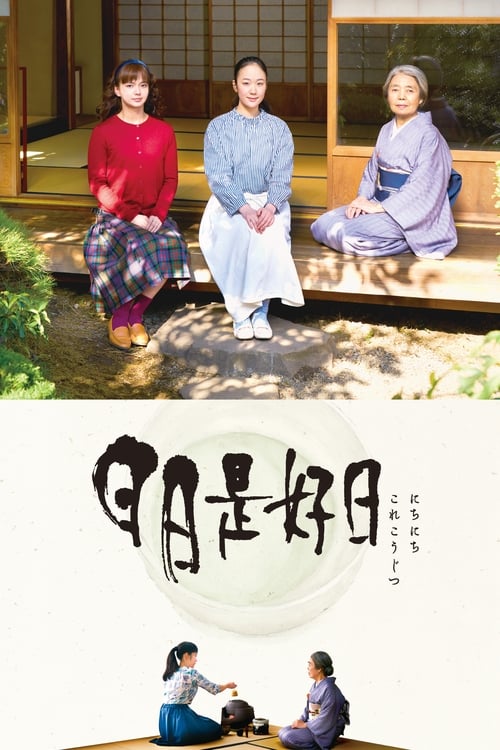
A university student attends a Japanese tea ceremony near her house with her cousin. There she has the Japanese tea ceremony in her life and it's there for her during moments when she is sad or happy.
Get the Weekly Woke Watchlist
New and trending movies scored for woke bias, preachy messaging, and forced political themes — before you waste your evening.
No spam. One useful email per week.
Overall Series Review
Categorical Breakdown
The entire cast is authentically Japanese, focusing on a specific Japanese cultural art form. The narrative judges the main character based purely on her dedication and personal perseverance, not on any immutable characteristics or social hierarchy. There is no mention or critique of 'whiteness' or forced attempts at 'diversity' in the story.
The movie is a direct embrace and celebration of a core Japanese cultural and spiritual tradition, Sadō, and the wisdom of Japanese ancestors. The central theme involves the protagonist finding solace and meaning by reconnecting with her own cultural roots, which functions as a shield against the chaos and indecision of modern life. There is no hostility toward the 'home' civilization or its traditions.
The female lead is initially indecisive and bumbling, and her arc is one of decades-long, patient learning and growth, not instant perfection. Her cousin chooses a path to become an 'average housewife,' a life choice that is not demonized. Men, such as the protagonist's father, are portrayed as kind, supportive, and protective figures. The teacher's authority is rooted in gentle discipline and tradition, not in the feminist 'Girl Boss' trope.
The story maintains a normative structure, focusing on the main character's relationships with her family, a boyfriend, and her female cousin and teacher. The central focus is on a traditional spiritual practice and personal growth. Sexual identity is not a narrative theme, nor is there any attempt to deconstruct the nuclear family or introduce gender ideology.
The movie is profoundly spiritual, focusing on the discipline and principles of Sadō, which is deeply rooted in Zen Buddhism. The practice provides the protagonist with a transcendent framework built on principles like Harmony, Respect, Purity, and Tranquility. The narrative champions this 'way' as a source of objective truth and inner strength, strongly opposing moral relativism or a spiritual vacuum.
Get the Weekly Woke Watchlist
New and trending movies scored for woke bias, preachy messaging, and forced political themes — before you waste your evening.
No spam. One useful email per week.