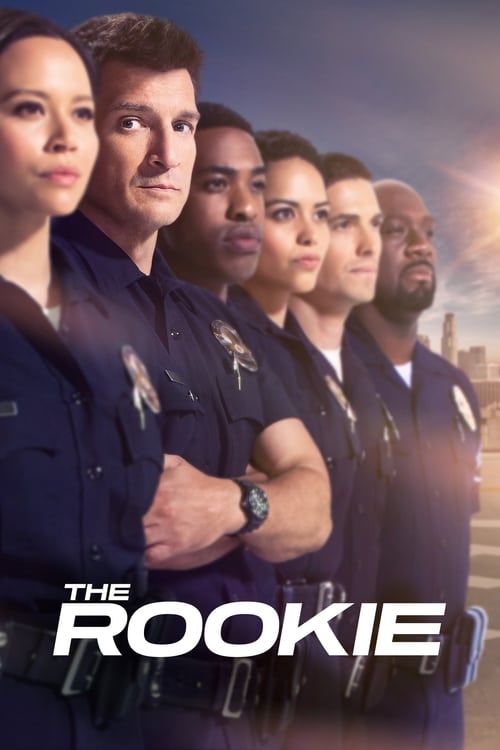
The Rookie
Season 2 Analysis
Season Overview
Six months into his career as a cop, John Nolan, the oldest rookie in the LAPD, has used his life experience, determination and sense of humor to keep up with rookies 20 years his junior. But as he embarks on the second half of his rookie year, Nolan will be put to the test by a host of new challenges, romantic relationships and deadly criminals, as he looks to figure out what kind of cop he ultimately wants to be.
Season Review
Categorical Breakdown
The casting is diverse, reflecting the complexity of Los Angeles, and the main corrupt antagonist is Detective Nick Armstrong (a Black man), preventing a simple vilification of 'whiteness.' The narrative primarily focuses on systemic *corruption* and ethical dilemmas, though it does feature a new Black female T.O., Nyla Harper, who must fight a difficult custody battle, a story that intertwines personal life and professional success through an intersectional lens. The political themes are present but not yet consistently overriding the procedural plots, as is noted in commentary comparing it to Season 3.
The central conflict involves exposing corruption within the LAPD, specifically a detective who is framed as a moral pillar but is secretly a villain. This theme critiques the integrity of the *institution* and its 'flawed system,' aligning with civilizational deconstruction. However, the vast majority of characters (the protagonists) are dedicated cops fighting to uphold the law, which frames the institution as redeemable and a necessary shield against chaos. The focus is on purification, not wholesale destruction or demonization of the entire national heritage.
The season is characterized by a high degree of 'Girl Boss' and 'Mary Sue' representation. The new Training Officer, Nyla Harper, is a highly-skilled former undercover agent who instantly establishes herself as a tactical superior to many of her male colleagues, including the main lead, Nolan. Angela Lopez is shown succeeding professionally, earning her detective exam. Commentary frequently notes that the female characters are portrayed as "flawless and always right and better than the men," and emasculating themes are present through the portrayal of women as 'hyper independent' and men sometimes as bumbling or secondary.
The gay rookie character, Jackson West, remains part of the main cast. His sexuality is present but is not the focal point of his character arc or the season's major storylines. His relationship with his boyfriend is described as subtle with barely any screen time or interaction. This inclusion provides simple representation without centering a 'Queer Theory' lens or actively deconstructing the nuclear family as a plot point.
The show is a secular police procedural that does not feature religion as a meaningful source of conflict or strength. The morality discussed is professional and ethical, concerning police work, corruption, and the law. There are no explicit plot points vilifying traditional religion, and morality is treated as an objective professional code (upholding the law) rather than subjective 'power dynamics.' This results in a low score due to general neutrality on the subject.