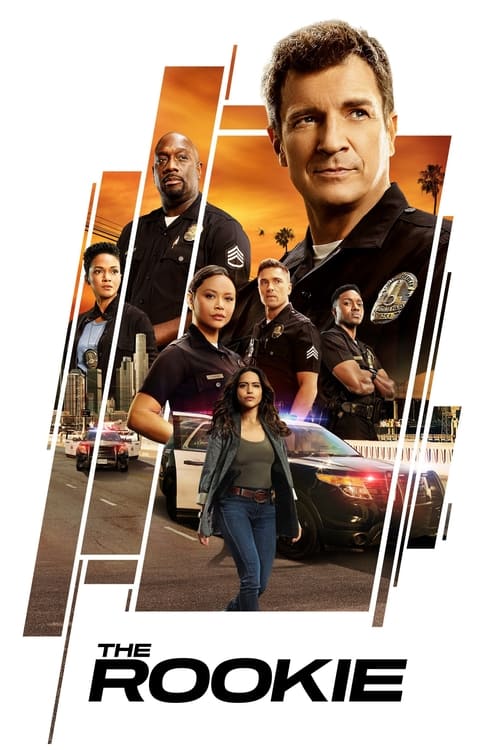
The Rookie
Season 5 Analysis
Season Overview
John Nolan becomes a training officer, mentoring his new rookie, Celina Juarez, and navigating the challenges of his new role while his relationship with Bailey evolves.
Season Review
Categorical Breakdown
The narrative places a high premium on immutable characteristics, particularly with the introduction of the new rookie, Celina Juarez. She frames a superior's professional advice as an oppressive act of an older white male telling a Hispanic woman how to live her life. The casting prioritizes racial and ethnic diversity in key roles, often at the expense of consistent character writing.
The show dedicates significant plot time to discussions and storylines that critique the police department as an institution riddled with systemic racism and corruption. This frames the core Western institution as fundamentally flawed, requiring constant reform and re-education by the characters.
Female characters are almost universally depicted as hyper-competent, operating as 'Mary Sues' or 'superheroes' with implausible skills across various fields. The male leads are frequently shown as emotionally weaker, less capable in an emergency, or bumbling in comparison. Women repeatedly win physical altercations against larger male adversaries without logical explanation.
The absence of a central LGBTQ+ main character is noted after the previous one was killed off. The core main cast relationships remain strictly heterosexual, which lowers the intensity of the queer theory lens. The topic is not a driving force in the season's main arcs.
The new rookie, Celina Juarez, consistently bases her police work and arrests on non-rational spiritualism, citing 'dark auras,' curses, and crystals to guide her actions. The narrative validates these subjective feelings as a source of truth that often leads to results, directly undermining objective, evidence-based procedure and promoting a subjective moral framework.