The Rookie
Season 6 Analysis
Season Overview
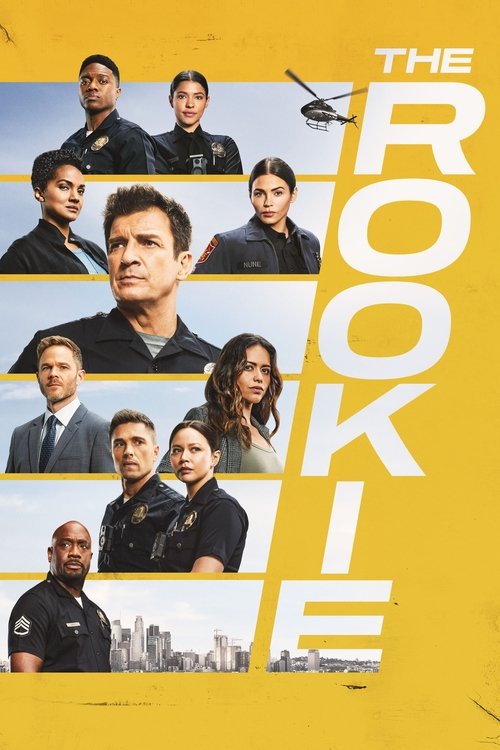
John Nolan, the oldest rookie in the LAPD, has used his life experience, determination and sense of humour to keep up with rookies 20 years his junior. Nearing the end of his training, Nolan now faces his biggest challenge as a police officer when he must come to terms with the choices he has made in pursuit of the truth.
Season Review
Categorical Breakdown
The narrative frequently frames issues and characters through an intersectional lens, prioritizing immutable characteristics over merit. Multiple reviewers point to storylines that feel designed to 'lecture on privilege' and 'racism.' The primary main villain for the season, Monica Stevens, is a powerful, highly intelligent female defense attorney of color who exploits the entire justice system, a complex villain that is not clearly framed by her identity. However, the overarching thematic commentary, which critics note has increased over the seasons, forces systemic oppression discussions and 'inequality in the workplace' into the foreground, overshadowing character-driven development.
Hostility toward Western institutions is evidenced by the continuous and intense scrutiny of the American policing system (LAPD). The season's major plot arc involves a mole (a police psychologist) and a corrupt lawyer (Monica Stevens) leveraging their positions to undermine law enforcement from within, framing the institution as fundamentally compromised and leaky. This constant portrayal of high-level police corruption and institutional failure, which is a common theme in the series, constitutes a deconstruction of a civilizational institution.
The season scores extremely high due to the relentless application of the 'Girl Boss' and 'Mary Sue' tropes. Female leads are consistently depicted as universally superior in intellect, combat, and leadership, often performing better than male officers even when heavily pregnant. Male characters, including the show's star John Nolan and Tim Bradford, are often presented as easily duped, subordinate, or 'feminized' to highlight the women's dominance. The narrative features a woman (Bailey) proposing to a man (Nolan) and an overarching sentiment that women are 'far superior to men' and that career is the only source of fulfillment.
The season is relatively restrained in this category. The main cast's romantic storylines are overwhelmingly heterosexual, revolving around two weddings and discussions of starting a family. The primary gay male character from earlier seasons (Jackson West) was killed off and not replaced by a new LGBTQ+ main character. The focus is on traditional, though non-complementary, male-female pairings as the standard structure, preventing an extremely high score, despite the show's association with its canceled spin-off's overt 'Queer Theory' representation.
The score is a ten due to the overt and recurring inclusion of Celina Juarez, Nolan's rookie, whose character is defined by 'mysticism,' 'starcharts,' and 'psychic bullshit,' which the show increasingly validates as truth in police work. The narrative frequently proves her 'superstitions' correct over rational police procedure, portraying a world where intuition and New Age beliefs are superior to logic and science. This validation of 'junk science' and a mystical, non-objective moral truth creates a spiritual vacuum, replacing transcendent morality or traditional faith with subjective magical thinking.