The Rookie
Season 7 Analysis
Season Overview
John and the team welcome two new rookies and continue the hunt for two dangerous inmates with very personal vendettas following their prison escape.
Season Review
Categorical Breakdown
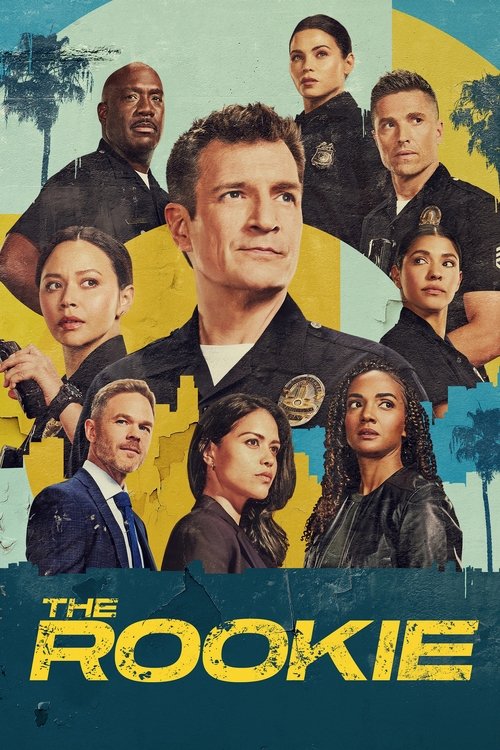
The core cast is highly diverse in race and gender, holding key leadership positions, and casting consistently prioritizes non-White and female leads. The introduction of new rookies features a White male character who is portrayed as a weak, deceitful 'fainting goat' who fakes a severe illness, contrasting with the aspirational Black male rookie whose storyline focuses on growth and humbling. Detective Nyla Harper’s character explicitly focuses on 'police reform initiatives.'
The show is a police procedural focused on upholding the law in a major American city, which prevents an extreme score. However, plot points directly feature 'anti-LAPD billboards' that frame the police institution as fundamentally opposed by segments of the community. The narrative occasionally raises complex issues around policing and police misconduct, suggesting the institution is flawed and in need of political reform, not a source of unconditional good.
The 'Girl Boss' trope is heavily employed as Lucy Chen is promoted to Sergeant, placing her on professional 'equal footing' with her male partner, Tim Bradford, who is consistently framed as needing to 'regain' her trust. John Nolan's fiancée, Bailey Nune, embodies the 'Mary Sue' archetype, being criticized by some for being a perfect, multi-talented 'know it all' who is a firefighter, EMT, and reserve army. Motherhood is present but the central focus for female characters is career ascendancy and empowerment.
The season focuses on traditional heterosexual relationships, such as the reconciliation of a male/female couple and a main male and female character assessing their ability to adopt a child. Available plot summaries do not feature storylines centering on alternative sexual identities, gender ideology, or deconstruction of the nuclear family as a political point.
The show is largely secular and preoccupied with law enforcement and crime rather than spiritual matters. The narrative does not contain explicit scenes or dialogue that demonize traditional religion or frame Christian characters as villains or bigots. Morality is generally depicted as an objective good versus evil through the nature of police work, though it exists in a largely moral-relativist secular vacuum.