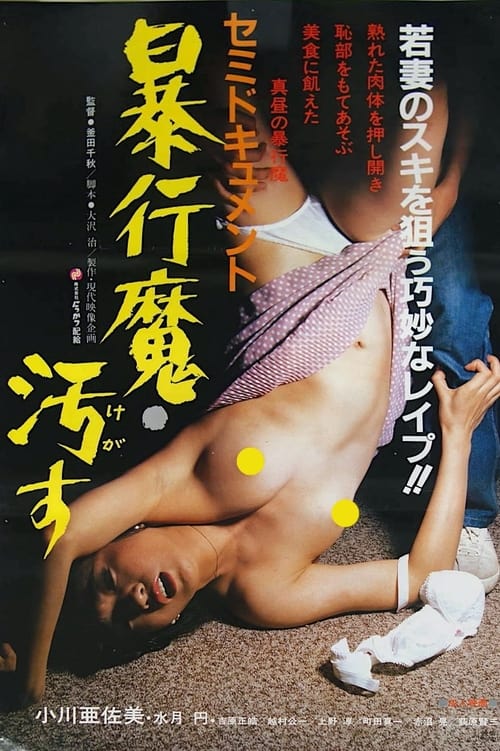
Semi-document Bôkô-ma kegasu
Plot
Get the Weekly Woke Watchlist
New and trending movies scored for woke bias, preachy messaging, and forced political themes — before you waste your evening.
No spam. One useful email per week.
Overall Series Review
Categorical Breakdown
The film is a product of 1983 Japanese cinema and is not concerned with race or intersectional identity politics as defined by Western standards. Characters are not judged by immutable characteristics, and there is no vilification of 'whiteness' or forced diversity. The drama is driven by personal actions and conflict, not systemic oppression.
The narrative does not center on hostility toward Western civilization. As a Japanese film, its potential criticism would be internal to its own society, not focused on demonizing Western culture or ancestors. There is no framing of its home culture as fundamentally corrupt or racist through a Western lens.
While the movie's genre may involve explicit themes or graphic violence against women, which is a critique separate from the 'woke' lens, it does not promote the 'Girl Boss' or anti-natalism tropes. There is no presentation of motherhood as a 'prison' or a portrayal of all men as bumbling, emasculated idiots. The score is marginally higher than 1 due to the likely mature, and potentially exploitative, depiction of women, though not in the context of 'woke' feminism.
The movie does not center alternative sexualities or focus on deconstructing the nuclear family through a Queer Theory lens. The content, being a genre film from 1983, operates within a normative structure, even if it explores non-standard sexual relationships in an explicit, non-ideological manner. Sexuality is treated as a private, visceral component of the drama, not a public political lecture.
The film does not target traditional religion, specifically Christianity, as the root of evil. As a Japanese film, the cultural context is not focused on Christian anti-theism. The narrative is driven by material conflict and human depravity, not a philosophical attack on objective moral law or transcendent faith. Religion is not a central theme.
Get the Weekly Woke Watchlist
New and trending movies scored for woke bias, preachy messaging, and forced political themes — before you waste your evening.
No spam. One useful email per week.