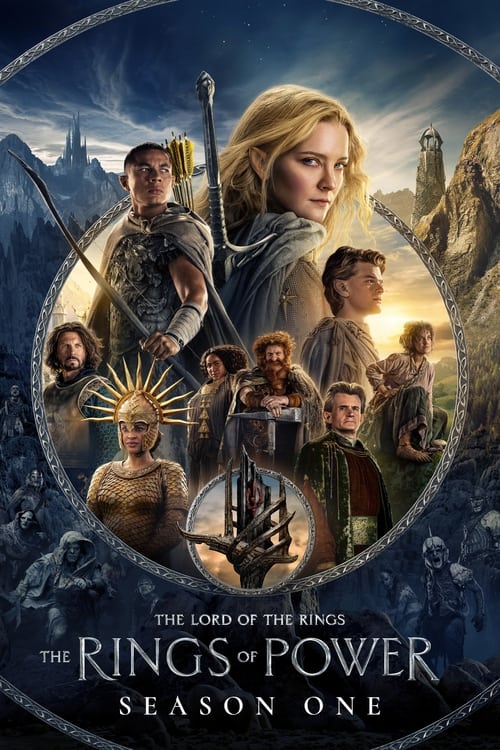
The Lord of the Rings: The Rings of Power
Season 1 Analysis
Season Overview
No specific overview for this season.
Season Review
Categorical Breakdown
Actors of color are systematically cast as members of Elves, Dwarves, Harfoots, and Númenóreans, which are races traditionally depicted as homogeneous in the source material's implied legendarium and previous screen adaptations. This 'race-swapping' is a highly visible form of forced diversity applied to nearly every faction. While the narrative does not overtly lecture on race or vilify 'whiteness' in dialogue, the deliberate casting pattern is a central and undeniable element of identity politics in the production.
The plot line of Númenor focuses on its isolationism and mounting resentment against the Elves and the Undying Lands, which is presented as a corrupting influence leading to the kingdom's canonical decline. This represents a narrative deconstruction of a great human kingdom's heritage based on pride and xenophobia. However, the themes of home (the Shire-like Harfoots) and ancestors are mostly treated with traditional respect, and the fall of Númenor follows an established, non-political arc of decline.
Galadriel is the driving protagonist of the entire series, depicted as a perfect, uncompromising warrior who is often antagonistic towards male figures of authority. The narrative foregrounds her as a solo 'Girl Boss' on a quest for vengeance, largely setting aside her canonical role as a wise, married co-ruler and mother. Prominent male figures like Gil-Galad and Elrond are portrayed as passive, dismissive, or only supporting her quest, fulfilling the trope of the all-capable female lead and the emasculation of male characters.
The first season's narrative contains no explicit presentation of alternative sexualities, deconstruction of the nuclear family unit, or overt gender ideology. Relationships that are explored, such as with the Dwarves, Harfoots, and the human character Bronwyn, adhere to the traditional male-female pairing and a normative structure.
The core conflict of the series is a battle against the objectively evil Dark Lord Sauron, and the divine figures of the Valar/Maiar (The Stranger) are present, which reinforces a belief in transcendent moral law. While the established 'religion' of Númenor is tied to their decline, it is more a spiritual failing of pride than a critique of theism itself. The overall framework operates within the clear objective morality of Tolkien's world.