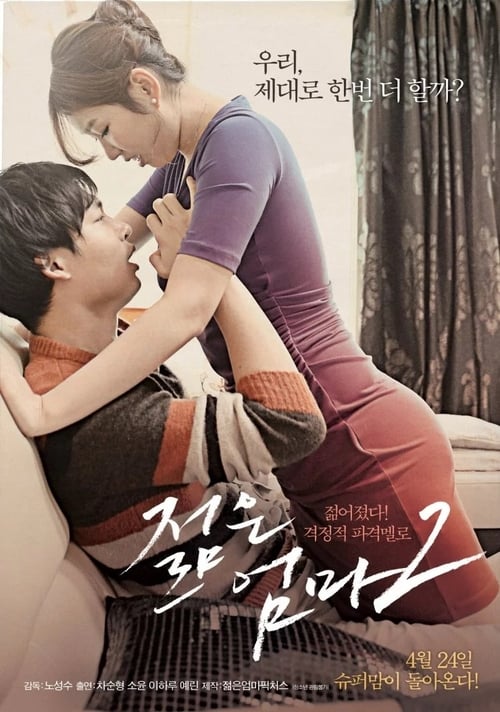
Young Mother 2
Plot
Yeong-gil is in graduate class and is stressed about getting a job. To make things worse, he's not had any experience with women yet, so he's always searching for something in his dreams but wakes up to nothing. Then one day, there is a change in his life, he puts his hand in The Box of Pandora and gets a job although it wasn't a regular position. He sleeps with his female superior during the interview even though it's not how he imagined it. Then one day, he visits Joo-yeon's home and meets her beautiful mother. Can he keep himself from being seduced by this woman?
Get the Weekly Woke Watchlist
New and trending movies scored for woke bias, preachy messaging, and forced political themes — before you waste your evening.
No spam. One useful email per week.
Overall Series Review
Categorical Breakdown
The cast and setting are entirely South Korean, making themes of racial diversity, 'whiteness' vilification, or historical 'race-swapping' irrelevant. Characters are defined by their status (student, employee, mother) and sexual desires, not an intersectional lens.
The plot challenges the integrity of the family unit through adultery and unconventional relationships between generations. The critique is focused on personal and domestic morality rather than a broad deconstruction or demonization of the home culture, nation, or ancestors.
Female characters are agents of powerful, boundary-breaking desire and authority, with the superior initiating a sexual relationship with her subordinate. The 'mother' figure is defined by her seductiveness and illicit involvement, subverting the traditional, celebrated role of motherhood. The male protagonist is often the recipient of female action and power.
The entire plot revolves around explicitly heterosexual, albeit illicit, pairings (older woman/younger man). There is no presence of gender ideology, alternative sexualities, or lecturing on queer theory. The central conflict affirms the traditional male-female pairing as the normative structure, though its boundaries are violated.
The movie is a secular erotic drama that focuses on navigating desires and moral dilemmas outside of a religious framework. There is no explicit attack or hostility toward traditional religion. Morality is implicitly subjective, driven by individual passion and transgression, rather than being rooted in an objective, transcendent moral law.
Get the Weekly Woke Watchlist
New and trending movies scored for woke bias, preachy messaging, and forced political themes — before you waste your evening.
No spam. One useful email per week.