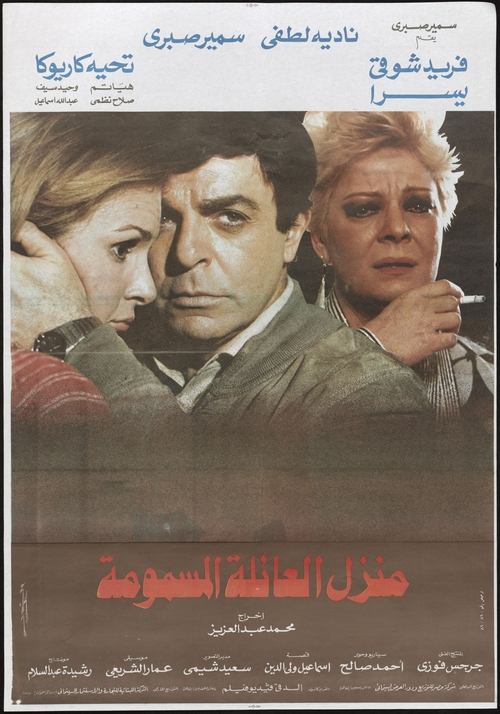
House of the Poisoned Family
Plot
Sina' learns of the numerous affairs her husband Shakir has had with other women. At this time, she gets to know Hashem, and they become increasingly close. Hashem learns of the dysfunctions within Sina’’s family and tries to take advantage of this for his own interests, specially after meeting Arfan, the husband of Sina’s sister. Arfan uses Sina’s sister’s money for his own projects, and tries to pressure his daughter Hoda into marrying a rich Arab man.
Get the Weekly Woke Watchlist
New and trending movies scored for woke bias, preachy messaging, and forced political themes — before you waste your evening.
No spam. One useful email per week.
Overall Series Review
Categorical Breakdown
The narrative focuses entirely on the moral failures and character flaws of individuals—infidelity, greed, manipulation—not on race, identity, or intersectional power dynamics. The conflict is based on character merit and immorality, with all major characters belonging to the same ethnic and cultural background.
The movie’s central theme is the corruption and dysfunction of the fundamental social unit, the family, which is explicitly called ‘Poisoned.’ The core institutions of the home culture are depicted as being corrupted by the selfishness, dishonesty, and exploitation of male figures (Shakir and Arfan), which frames the home as fundamentally diseased.
The plot heavily criticizes the male characters for infidelity, financial exploitation, and forcing a daughter's marriage for personal gain. Female characters (Sina’, her sister, and Hoda) are depicted as victims of patriarchal abuses and greed. This aligns with themes that expose male toxicity and the damaging effects of traditional male power structures.
The entire conflict is centered on the failure of traditional, heterosexual marriages and an attempted arranged marriage. Alternative sexualities, gender ideology, or a critique of the nuclear family structure itself are not part of the narrative content.
The movie is a moral critique of human greed, betrayal, and manipulation. It does not demonize religion, and there are no religious figures or institutions portrayed as the root of evil. The narrative implicitly appeals to a higher moral standard by condemning the characters' actions.
Get the Weekly Woke Watchlist
New and trending movies scored for woke bias, preachy messaging, and forced political themes — before you waste your evening.
No spam. One useful email per week.