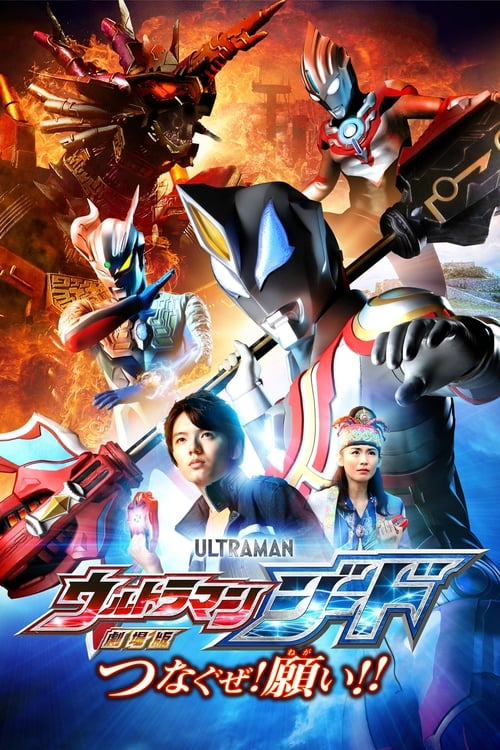
Ultraman Geed the Movie: Connect! The Wishes!!
Plot
The Giant Artificial Brain Gilbaris is trying to eliminate all intellectual life forms throughout the universe. Ultraman Geed confronts the harsh fate against a mighty enemy who withstands the power of Ultra Warriors' light. Ultraman Orb, Jugglus Juggler, and Ultraman Zero rush to the crisis! And the heated feelings inside Riku awakens Geed's Ultimate form - Ultimate Final!
Get the Weekly Woke Watchlist
New and trending movies scored for woke bias, preachy messaging, and forced political themes — before you waste your evening.
No spam. One useful email per week.
Overall Series Review
Categorical Breakdown
The movie does not engage with identity politics. The main conflict is a universal struggle to save all life from an artificial intelligence. The protagonist, Riku, is judged by his determination and merit, not by race or other immutable characteristics, reflecting a universal meritocracy. The casting is entirely in line with the Japanese production context.
The film demonstrates gratitude toward its cultural setting by featuring the Okinawa region and respectfully incorporating the local Shisa mythology with the creature Gukuru Shisa. The villain is an external, non-human, omnicidal AI, not a critique of Earth or a specific civilization. The goal is the preservation of Earth and all its life, which is the antithesis of civilizational self-hatred.
Gender dynamics are complementary and focused on merit. Laiha Toba is a capable and physically active martial artist who contributes to the team's success with her own skills. Another female character, Moa Aizaki, is an effective AIB agent. The movie features a character (Leito Igaguri) whose connection to his wife and daughter is a source of strength, which celebrates family and masculinity as protective, rejecting anti-natalism and emasculation tropes.
The movie follows a normative structure. The existing relationships, such as the marriage of Leito Igaguri, celebrate the traditional nuclear family structure. The narrative does not feature any elements that center on alternative sexual ideologies or promote gender theory.
The narrative acknowledges an Objective Truth and a higher moral law: the protection of all intellectual life is an inherent good. The heroes’ actions are driven by transcendent morality and the power of their 'wishes' and hope. There is no hostility toward religion or framing of faith as evil; instead, the local Shisa mythology is treated as a protective cultural element.
Get the Weekly Woke Watchlist
New and trending movies scored for woke bias, preachy messaging, and forced political themes — before you waste your evening.
No spam. One useful email per week.