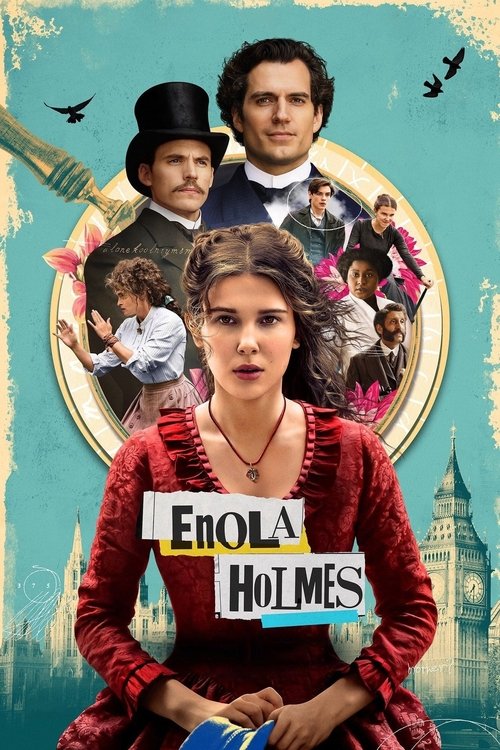
Enola Holmes
Plot
While searching for her missing mother, intrepid teen Enola Holmes uses her sleuthing skills to outsmart big brother Sherlock and help a runaway lord.
Get the Weekly Woke Watchlist
New and trending movies scored for woke bias, preachy messaging, and forced political themes — before you waste your evening.
No spam. One useful email per week.
Overall Series Review
Categorical Breakdown
The plot focuses heavily on gender and class-based oppression within Victorian society rather than race. A prominent Black suffragette character is included who delivers a pointed lecture to Sherlock about his privilege in a world that suits him. The main cast is largely white, but the narrative does incorporate an intersectional view through the class/gender lens and the inclusion of an activist character who critiques the establishment from a non-white perspective.
The central conflict frames the existing English social and political order of the time as corrupt and oppressive, suggesting the institutions of its civilization are inherently flawed and need to be overthrown for 'progress'. The conservative elements of the ruling class are depicted as literal murderers attempting to suppress an important political reform. Traditional English heritage, represented by institutions like the finishing school and the House of Lords, is positioned as the primary antagonist against individual freedom.
The movie is a clear vehicle for a 'Girl Boss' narrative. Enola is a 'Mary Sue' character who is instantly brilliant at deduction and fighting (jiujitsu), surpassing her male contemporaries, including the legendary Sherlock, whom she actively works to 'outsmart'. Traditional femininity and marriage are explicitly framed as an 'oppression' and a 'prison'. The mother, Eudoria, is an anti-natalist figure who abandons her home and daughter to pursue her political cause, validating the path of radical activism over family responsibility as the higher moral good.
The narrative does not center on or include overt LGBTQ+ characters, relationships, or political messaging related to sexual ideology or gender identity. The focus of the gender conflict is strictly on the roles of biological males and females in a patriarchal society. The normative family structure is deconstructed via the feminist lens of opposing motherhood and marriage, but not through a queer theory framework.
There is no significant presence of anti-theistic themes, hostility toward religion, or vilification of Christian characters. The moral conflict of the movie is entirely secular, focusing on political reform and social gender roles. The film's moral framework leans toward subjective freedom and self-determination over transcendent moral law, but this is implied and not directed at religion itself.
Get the Weekly Woke Watchlist
New and trending movies scored for woke bias, preachy messaging, and forced political themes — before you waste your evening.
No spam. One useful email per week.