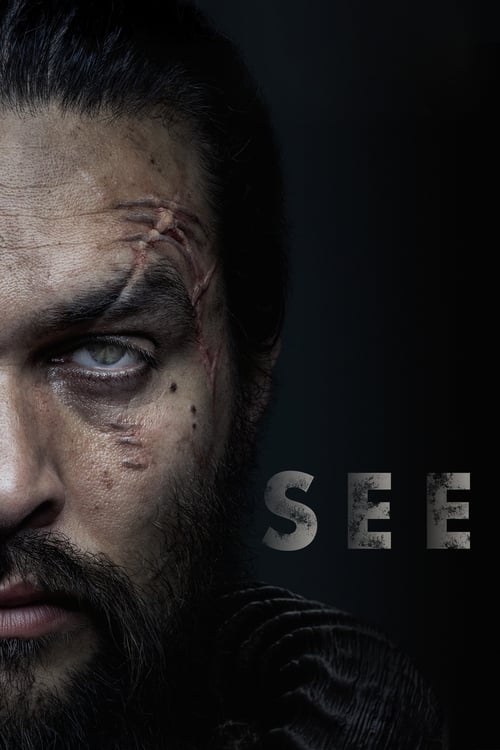
See
Season 1 Analysis
Season Overview
No specific overview for this season.
Season Review
Categorical Breakdown
Characters are judged by their ability to see (sight) versus their lack of it (blindness), which forms the world's primary conflict and social hierarchy, rather than race or other immutable characteristics. The central hero, Baba Voss, a man of color, embodies high character merit as a fiercely protective husband and father. The main antagonist, Queen Kane, is a white female tyrant. Casting is diverse, but the plot does not rely on intersectional-lens lecturing.
The current blind civilization frames its pre-virus ancestor-culture (implied to be our modern, technological society) as the destructive force that caused the global plague and the subsequent darkness. The knowledge and technology of the 'old world' are considered heretical myths or supernatural, indicating a demonization of the former civilization. While the current blind society is shown to be barbaric and violent, the former civilization is implicitly critiqued as being fundamentally corrupt.
The gender dynamics are balanced between a powerful, protective masculine hero and powerful, authoritative female figures. Baba Voss is the quintessential, non-emasculated male warrior whose primary motivation is the defense of his family and the celebration of his role as an adoptive father. Opposing him is the psychotic 'Girl Boss' villain, Queen Kane, a tyrannical and highly sexualized ruler whose religious-political system is purely destructive. Female characters hold roles of extreme power (Queen, Shaman, warrior), but the core family unit is framed positively.
The narrative centers entirely on the traditional male-female pairing of Baba Voss and Maghra and the survival of their biological and adoptive nuclear family. No alternative sexual identities are centered, and there is no discussion or incorporation of gender ideology into the world's structure or social norms.
The entire state-enforced religion of the Payan Kingdom is depicted as a tyrannical, authoritarian system that persecutes anyone associated with the concept of sight (truth/knowledge). The religious leader, Queen Kane, is portrayed as completely insane, communing with her 'Gods' through bizarre sexual rituals, confirming the idea that traditional religion is a vehicle for madness, ignorance, and evil.