See
Season 2 Analysis
Season Overview
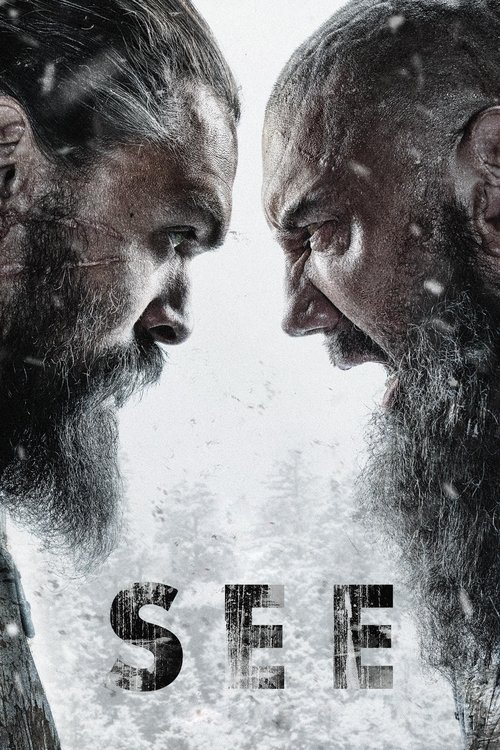
Baba Voss is fighting to reunite his torn-apart family and get away from the war and politics that surround him, but the more he moves away, the deeper he gets sucked in, and the emergence of his nemesis brother threatens his family even more.
Season Review
Categorical Breakdown
The main conflict is a brutal geopolitical and family feud driven by personal revenge and the rare characteristic of sight, not modern-day race or gender intersectionality. The lead hero (Baba Voss) and main villain (Edo Voss) are both non-white males, with the hero motivated by protecting his immediate family. Characters are primarily judged by their power, loyalty, and sheer survival capability within the post-apocalyptic world, regardless of modern immutable characteristics.
The foundational premise of the entire world is that the ancestor's world, implicitly representing our modern civilization with sight, was so fundamentally corrupt and destructive that its vision became a curse that destroyed the planet. The new, blind, primitive culture frames the past civilization as a moral and existential catastrophe, making the mere trait of 'sight' (the defining feature of the old world) an executable offense due to 'practicality,' not mere superstition.
Female characters hold the highest political power, with Queen Kane and Maghra serving as the primary antagonists and coup leaders whose machinations drive the central conflict. They are ruthlessly effective and often overshadow the strategic and political competence of many male characters. The sighted twin daughters openly defy their parents and reject their father's counsel to march to war, prioritizing individual agency and ambition over the traditional family unit.
The core story arc of a primary protagonist, Haniwa, includes an emotionally prominent and romantic relationship with her female captor, Wren. This explicit centering of an alternative sexual identity is a key plot device for Haniwa's development and escape, placing a non-traditional sexual pairing within the main narrative focus.
Religious devotion within the world of the blind is explicitly portrayed as a grotesque or cynical political tool. Queen Kane's 'prayer' ritual is depicted as a scene of explicit self-gratification, serving to debase and mock any notion of sincere or transcendent spiritual practice. Other leaders use claims of divine connection to cynically manipulate the populace into supporting their political agendas and war, framing faith as a tool of oppression.