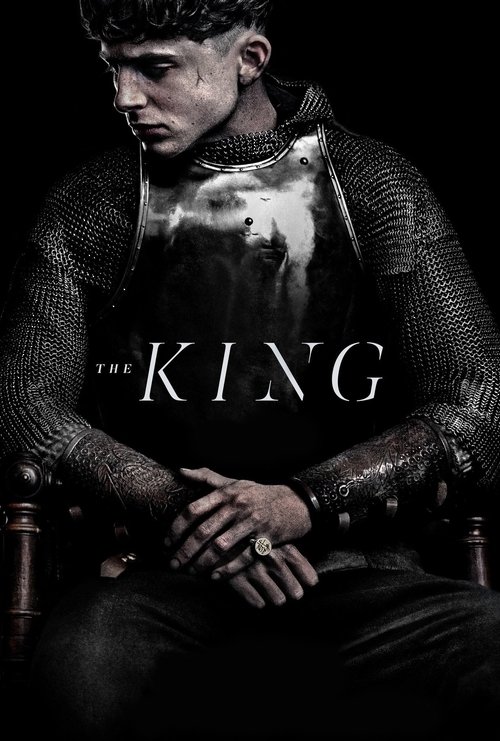
The King
Plot
England, 15th century. Hal, a capricious prince who lives among the populace far from court, is forced by circumstances to reluctantly accept the throne and become Henry V.
Get the Weekly Woke Watchlist
New and trending movies scored for woke bias, preachy messaging, and forced political themes — before you waste your evening.
No spam. One useful email per week.
Overall Series Review
Categorical Breakdown
The film does not focus on intersectionality, race-swapping, or the vilification of whiteness, as all main characters are historically white European figures. The conflict is based on political intrigue and power, not identity. Characters are judged by their competence and moral corruption, which primarily belong to the established (white male) elite.
The central narrative deconstructs national heritage by portraying the English monarchy and court as fundamentally corrupt, warmongering, and self-serving. The nation's war of conquest (Agincourt) is framed as a direct result of palace lies and manipulations orchestrated by advisors and the church, explicitly denying the traditional 'honorable' historical or Shakespearean justifications. This rewrites the ancestral legacy of Henry V as one of folly and deception.
The character of Catherine of Valois is revised from the source material to have a climactic and crucial role where she exhibits perfect moral clarity and political sagacity. She delivers a direct confrontation to the King, exposing the entire war as an act of male vanity, egotism, and bumbling that she, a woman, had to figure out. Her intellectual and moral superiority over all male political figures in the film serves as a clear example of the 'Girl Boss' trope, where the man is a manipulated fool and the woman is the sole voice of reason and truth.
The narrative focuses on medieval court politics, warfare, and the relationship between the king and his male advisors. There is no inclusion of alternative sexual ideologies, centering of LGBTQ+ characters, or commentary on gender theory.
The Christian Church, in the person of the Archbishop of Canterbury, is directly shown to be one of the chief conspirators who manipulates the King into war. The Archbishop's motivation is purely venal: to secure the church’s financial interests against proposed legislation. This portrays the institution of traditional religion as a corrupt and hypocritical political engine that actively instigates mass slaughter for financial gain.
Get the Weekly Woke Watchlist
New and trending movies scored for woke bias, preachy messaging, and forced political themes — before you waste your evening.
No spam. One useful email per week.