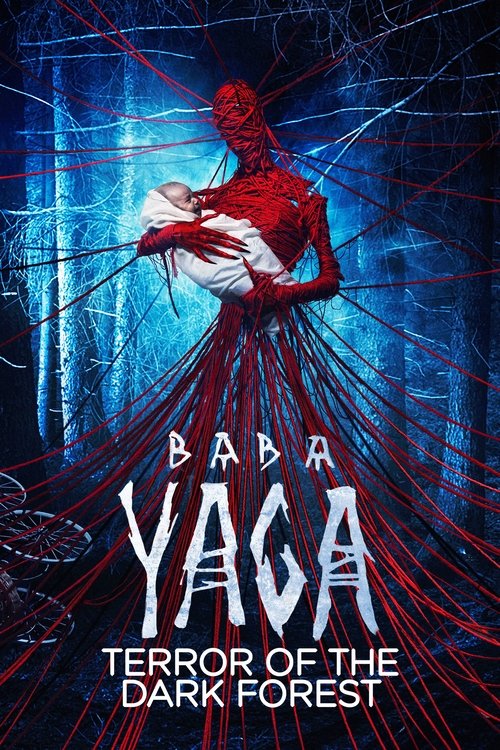
Baba Yaga: Terror of the Dark Forest
Plot
The young family who moved to a new apartment on the outskirts of the city. The nanny hired by them for the newborn daughter quickly gained confidence. However, the older boy, Egor, talks about the frightening behavior of a woman, but his parents do not believe him. The surveillance cameras installed by the father for comfort only confirm everything is in order. Then one day, Egor, returning home, finds no trace of either the nanny or the little sister, and the parents are in a strange trance and do not even remember that they had a daughter. Then Egor, together with his friends, goes in search, during which it turns out that the nanny is an ancient Slavic demon, popularly known as Baba Yaga.
Get the Weekly Woke Watchlist
New and trending movies scored for woke bias, preachy messaging, and forced political themes — before you waste your evening.
No spam. One useful email per week.
Overall Series Review
Categorical Breakdown
The casting is ethnically authentic to the Russian/Slavic setting and folklore source material. The main characters, a group of children, are defined by their courage, loyalty, and actions, such as Egor's determination to save his sister and Anton's transformation from a bully to an ally. Character merit drives the plot, not immutable characteristics or an intersectional hierarchy. There is no political lecturing on privilege or systemic oppression.
The film directly draws upon and modernizes ancient Slavic folklore, specifically the Baba Yaga myth, showing an engagement with and respect for its national and cultural heritage. The core conflict is a battle against a mythological demon from the past, which does not frame the home culture or institutions as fundamentally corrupt or racist. The narrative champions the traditional institution of the family unit, which the Baba Yaga seeks to destroy.
The main hero who initiates the search for the kidnapped baby is a boy, Egor, though he is aided by a capable girl, Dasha, establishing a mixed-gender protagonist group. The focus of the plot is on rescuing a newborn baby sister, which counters anti-natalist messaging by placing high value on infant life and family. The adult father figure is shown to be weak and easily deceived by the nanny/witch, which suggests an emasculation trope, but his failure is tied to the witch's magic, not an inherent critique of masculinity.
The core of the narrative involves a traditional family unit—father, stepmother, son, and baby daughter—being targeted by a demon. The plot does not contain any themes related to centering alternative sexualities, gender identity politics, or the deconstruction of the nuclear family. The sexuality of characters is private or non-existent, aligning with the focus on pre-adolescent heroes in a horror story.
The film is based entirely on a supernatural and spiritual conflict, acknowledging an objective realm of good and evil as represented by the children's quest and the ancient Slavic demon. The narrative does not critique or demonize traditional religion, specifically Christianity. The presence of a clear moral law—kidnapping and eating children is evil—reinforces a transcendent moral framework, not subjective 'power dynamics'.
Get the Weekly Woke Watchlist
New and trending movies scored for woke bias, preachy messaging, and forced political themes — before you waste your evening.
No spam. One useful email per week.