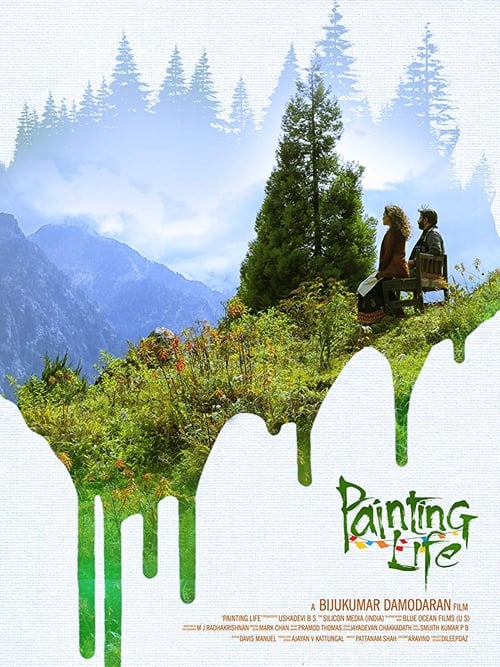
Painting Life
Plot
A Bollywood filmmaker and his crew gets stranded in a remote Himalayan village due to torrential downpours. How the intense experiences under siege, affect the filmmaker's thoughts and priorities forms the central theme of the film.
Get the Weekly Woke Watchlist
New and trending movies scored for woke bias, preachy messaging, and forced political themes — before you waste your evening.
No spam. One useful email per week.
Overall Series Review
Categorical Breakdown
The narrative's central conflict revolves around the moral and ethical privilege of the wealthy, commercial urban elite (the Bollywood crew) versus the marginalized local residents of the remote Himalayan community who are 'beleaguered' by social problems and dam construction. This frames the core tension as a critique of class and cultural/geographic privilege, fitting the intersectional lens by focusing on systemic inequality between groups within society. The critique is not directed at 'whiteness' or forced race-swapping, as the cast is pan-Indian.
The film exhibits a high degree of civilizational self-hatred by contrasting the 'breakneck pace and luxury of urban life' and commercialism with the 'gentler pace' and moral clarity of the remote Himalayan villagers. The urban life and its values are framed as morally shallow and disconnected from reality, while the local villagers and nature are presented as spiritually superior and repositories of authentic, beleaguered truth, strongly utilizing the Noble Savage trope.
Gender dynamics are secondary to the primary critique of class and ecological politics. The plot summaries contain no information suggesting the presence of 'Girl Boss' or 'Mary Sue' tropes. The focus is on the male protagonist's moral transformation, with no explicit anti-natalism or vilification of traditional masculinity beyond his commercial priorities being wrong.
The core thematic focus is on the critique of urban materialism and the importance of ecological awareness. There are no indications in the available plot or thematic analysis of the inclusion of alternative sexualities, deconstruction of the nuclear family, or any lecturing on gender ideology.
The film criticizes the protagonist's commercial, 'entertainment business' perspective, which has 'no connect to the real world or social issues.' This is a condemnation of a purely materialist and secular moral vacuum. The film’s setting in the Himalayas and the presence of a monk character suggest that a form of traditional, spiritual life (implied to be Buddhist/ecological awareness) acts as a source of transcendent morality. This is a critique of moral relativism through commercialism, not an attack on traditional religion itself.
Get the Weekly Woke Watchlist
New and trending movies scored for woke bias, preachy messaging, and forced political themes — before you waste your evening.
No spam. One useful email per week.