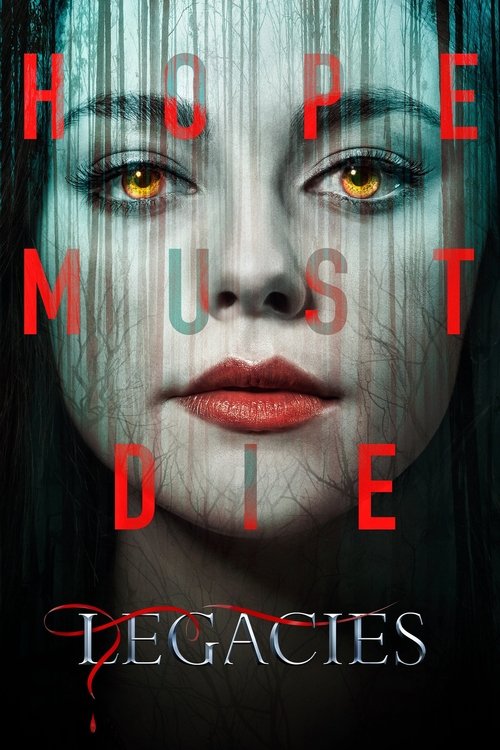
Legacies
Season 4 Analysis
Season Overview
No specific overview for this season.
Season Review
Categorical Breakdown
The core struggle is not explicitly rooted in race or intersectional hierarchy. The main character, a white female, achieves the apex of power, while a major white male figure is incapacitated for much of the plot. However, multiple non-white characters occupy prominent 'Super Squad' roles and one non-white female character, Cleo, has her narrative criticized for being poorly developed and shifting her supernatural status to serve the plot, which aligns with tokenization over organic character development.
The central mission of the main characters is consistently to protect their institution, the Salvatore School, and the community of Mystic Falls. This focus on defending the 'home' and the familial-style institution aligns with a sense of gratitude and respect for established structures, even as they fight internal and external chaos. There is no narrative framing that depicts Western society as fundamentally corrupt.
The main female leads, Hope and Lizzie, are given immense power upgrades and drive the core conflict. Hope transforms into the most powerful being in the world, and Lizzie becomes a powerful Heretic. Male characters like Alaric are removed from the central action, and others like Ethan and Kaleb are temporarily controlled by the villain, which sidelines male agency while female power is centered. This dynamic reflects the 'Girl Boss' trope despite Hope’s arc showing the dangerous side of unbridled power.
The season prominently features the positive development and resolution of a same-sex male relationship between Jed and Ben. This pairing is given significant screen time and a happy send-off in the finale. The narrative normalizes the alternative sexual identity and pairing without judgment, moving beyond a purely 'normative structure' but stopping short of focusing on deconstructing the nuclear family or pushing a gender ideology lecture on children.
The second half of the season features the Greek Gods as the main antagonists, who are portrayed as selfish, narcissistic, and tyrannical figures that the heroes must destroy. Antagonizing this spiritual, classical pantheon positions a higher power as fundamentally evil. However, the show’s supernatural premise itself relies on a framework of an 'afterlife' and 'limbo,' which acknowledges a transcendent spiritual reality and objective moral consequence without specifically demonizing traditional Abrahamic religion.