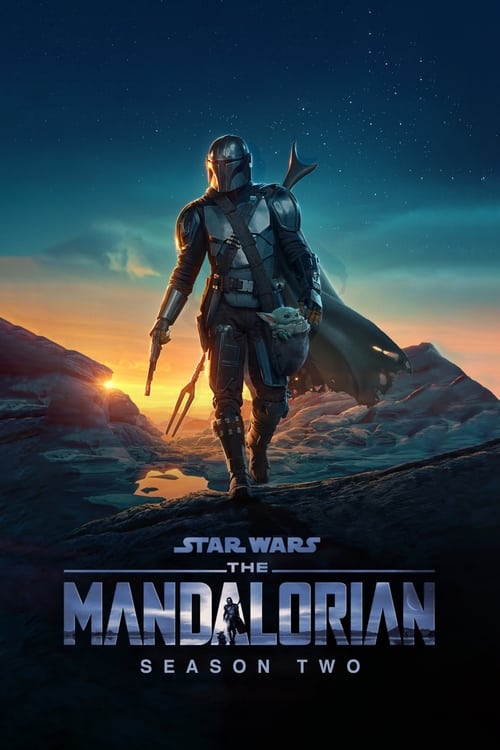
The Mandalorian
Season 2 Analysis
Season Overview
The Mandalorian and the Child continue their journey, facing enemies and rallying allies as they make their way through a dangerous galaxy in the tumultuous era after the collapse of the Galactic Empire.
Season Review
Categorical Breakdown
The main hero and his primary antagonist are white males, but they are surrounded by a diverse, multi-ethnic and multi-species supporting cast where competence is the only measure for alliance. The narrative focuses on character merit and tribal/ideological differences rather than race, and a white male character (Mayfeld) delivers the strongest critique of the galaxy's power structures. The previously vilified Tusken Raider species is given cultural depth and shown in a respectful, nuanced light.
The central culture, the Mandalorians, is not wholly demonized, but the protagonist's particular 'Way'—a highly traditionalist and isolationist creed—is explicitly identified as a zealous cult by more mainstream and politically moderate Mandalorians. The hero must ultimately reject this ancestral tradition to fulfill his moral duty to the Child. The New Republic is also framed as an ineffectual, idealistic, and distant successor government, introducing a mild critique of the 'new' civilization.
The season is saturated with powerful, hyper-competent female warriors and leaders, including Bo-Katan Kryze, Ahsoka Tano, Cara Dune, and Fennec Shand. These characters are instantly capable and often take the lead in combat and strategy. However, the male protagonist is equally competent, and the main thrust of the plot is a celebration of his protective masculinity and adoptive fatherhood, which counterbalances the 'Girl Boss' dominance.
The season is free of any detectable LGBTQ+ themes. The focus is exclusively on the male hero's quest to protect and nurture a child, reinforcing a traditional family-unit dynamic forged through choice and duty. Sexuality is not a factor in the narrative or character identities.
The protagonist's 'Way'—a strict, ancient Mandalorian creed—is revealed to be a fundamentalist sect, the 'Children of the Watch,' and is deconstructed by the narrative as restrictive and dogmatic. This frames rigid, literalist adherence to faith as a lesser form of morality compared to the hero's evolving personal moral code of love and sacrifice. Dialogue introduces moral relativism by having a character suggest the Empire and the New Republic are morally equivalent to those on the fringe, arguing that all power structures are essentially corrupt. This moves the morality away from the objective 'Light/Dark Side' truth of the original saga.