The Mandalorian
Season 3 Analysis
Season Overview
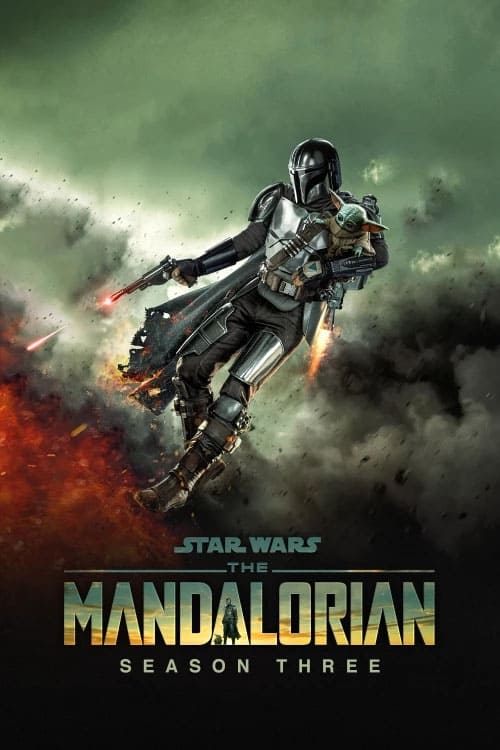
The journeys of the Mandalorian through the Star Wars galaxy continue. Once a lone bounty hunter, Din Djarin has reunited with Grogu. Meanwhile, the New Republic struggles to lead the galaxy away from its dark history. The Mandalorian will cross paths with old allies and make new enemies as he and Grogu continue their journey together.
Season Review
Categorical Breakdown
The narrative's primary conflict is not based on Earth-bound race or intersectional hierarchy. Instead, it features an in-world identity conflict where a character attempts to delegitimize the foundling Din Djarin, claiming only 'pure-blood' Mandalorians can lead. This internal cultural 'racism' is immediately rejected and refuted by the female leader Bo-Katan, with the ultimate message being that merit and adherence to the Creed are what truly define a Mandalorian. The casting is diverse but remains secondary to the cultural conflict, keeping the focus on in-universe meritocracy.
The central story is fundamentally anti-oikophobic for the Mandalorians, as the entire plot is about reclaiming and rebuilding their bombed-out, ancestral home and unifying their heritage. However, an entire episode is dedicated to showing the New Republic—the analog for the victorious Western-style liberal government—as deeply flawed, incompetent, and dangerously bureaucratic. The Amnesty Program is portrayed as a corrupting, failure-prone system that leads to mind-wiping, suggesting that the post-Imperial establishment is already falling into the moral cruelty of its totalitarian predecessor.
The season intentionally elevates a capable female character, Bo-Katan Kryze, into the primary leadership role. She effectively sidelines the male title character, Din Djarin, who spends much of the season supporting her or running secondary missions, aligning with the 'Girl Boss' trope by having the woman assume command of the entire culture. She is portrayed as highly competent and a powerful warrior. Conversely, her character arc is not a 'Mary Sue' as she is shown to have suffered repeated failures and to grow through humility and a renewed appreciation for family and tradition. The enduring theme of Din Djarin's fatherly devotion to Grogu provides a strong 'vitality' counter-message to anti-natalism.
One single episode features an almost entirely gratuitous background mention and appearance of a same-sex couple—a ship's captain and her captive/lover—who are mercenaries hired for a side mission. This inclusion is isolated and has no meaningful impact on the main plot, establishing a fleeting presence of alternative sexuality without centering the story or introducing gender ideology.
The story treats the Mandalorian 'Creed' (a religious/traditionalist faith) as a source of cultural strength and unity. Din Djarin's highly dogmatic and 'fundamentalist' sect, 'The Children of the Watch,' is portrayed as the moral catalyst that forces the secular factions to reunite and rediscover their strength. The 'religious' faction is not vilified; instead, their spiritual dedication is instrumental in the ultimate victory. The core message supports the value of a unifying faith and ancestral tradition.