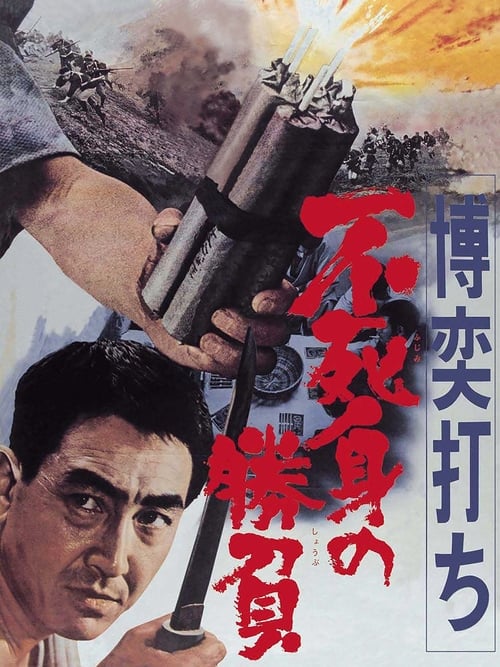
Gambler: Victory Without Death
Plot
Tsunetaro Asakura AKA "Dynamite Tsune" is a talented gambler, but not infallable. After losing his Boss's money in a dice game he repays his debt by serving as a pit boss for a struggling coal mine in Kyuushu. Quickly there's trouble with the local mining competition, who doesn't always play a fair game. True to his hot-headed nickname, Tsune only gets into deeper trouble.
Get the Weekly Woke Watchlist
New and trending movies scored for woke bias, preachy messaging, and forced political themes — before you waste your evening.
No spam. One useful email per week.
Overall Series Review
Categorical Breakdown
The narrative focuses on Tsunetaro 'Dynamite Tsune' Asakura's personal skill and honor as a gambler and pit boss, judging the character strictly by his individual actions and merit. As a 1967 Japanese film, the casting is historically authentic to its setting, and the conflict is internal to Japanese social groups (gamblers vs. competitors), with no vilification of 'whiteness' or forced diversity present.
The plot concerns a local conflict over a coal mine in Kyuushu, a regional drama of honor, debt, and competition. The protagonist defends the interests of his boss and a community from a rival group who ‘doesn’t always play a fair game,’ which frames the hero as a shield against chaos and corruption within a localized, traditional Japanese context. The film does not express hostility toward Japanese civilization or its ancestors.
The story is male-centric, focusing on the gambling and fighting of 'Dynamite Tsune.' Female characters, if present, are relegated to the supporting and traditional roles typical of the Ninkyo Eiga genre, such as loyal love interests or geishas. The plot makes no attempt to emasculate the male protagonist or promote 'Girl Boss' tropes; masculinity is depicted as hot-headed, protective, and central to solving the conflict.
As a 1967 Japanese genre film about Yakuza-adjacent gamblers and a local feud, the entire structure is normative. There is no presence of sexual ideology, no deconstruction of the nuclear family, and no lecturing on alternative sexualities or gender theory.
The moral framework is based on the traditional Japanese concepts of *Giri* (duty/obligation) and *Ninjo* (human emotion), which serve as a secular, objective code of honor for the Yakuza figure. The narrative’s morality is transcendent and objective, revolving around a personal code of conduct (chivalry) in opposition to the villain’s self-serving corruption. Traditional religion is not a factor, and there is no anti-Christian or anti-religious messaging.
Get the Weekly Woke Watchlist
New and trending movies scored for woke bias, preachy messaging, and forced political themes — before you waste your evening.
No spam. One useful email per week.