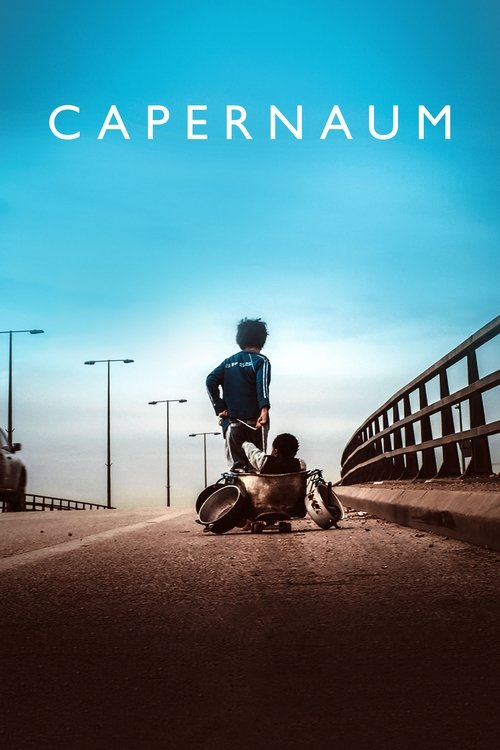
Capernaum
Plot
After running away from his negligent parents, committing a violent crime and being sentenced to five years in jail, a hardened, streetwise 12-year-old Lebanese boy sues his parents in protest of the life they have given him.
Get the Weekly Woke Watchlist
New and trending movies scored for woke bias, preachy messaging, and forced political themes — before you waste your evening.
No spam. One useful email per week.
Overall Series Review
Categorical Breakdown
The plot's central conceit is a lecture on the systemic oppression faced by marginalized groups: a Syrian refugee boy and an Ethiopian illegal immigrant mother struggling under the *kafala* system and statelessness. The narrative explicitly focuses on intersectional hierarchy where race, legal status, and poverty define suffering, rather than a character’s merit.
The film presents the local civilization (Lebanon/Beirut slums) as fundamentally corrupt, abusive, and chaotic. The central institutions of family and law are demonized, with the protagonist running away from and then suing his biological family, who are portrayed as abusive and negligent as a result of their own poverty.
The inciting incident and primary argument of the film is anti-natalist, as the protagonist sues his parents for bringing him into the world, which is the definition of opposing the reproductive imperative. Motherhood for the poor mother is depicted as a 'prison' of endless, neglected childbearing, and toxic, predatory masculinity is a key theme via child marriage and the exploitative landlord.
The narrative does not center on alternative sexualities, gender ideology, or a queer theory critique of the nuclear family. The focus is on traditional male-female pairings in the context of poverty, child marriage, and heterosexual neglect.
The film adopts a completely secular, humanist, and human rights framework to critique social ills. Faith is not presented as a source of strength, and the moral compass is entirely external to any traditional religious text or belief. It embraces a morality based on subjective human rights law and power dynamics, though it does not overtly vilify a specific religion.
Get the Weekly Woke Watchlist
New and trending movies scored for woke bias, preachy messaging, and forced political themes — before you waste your evening.
No spam. One useful email per week.