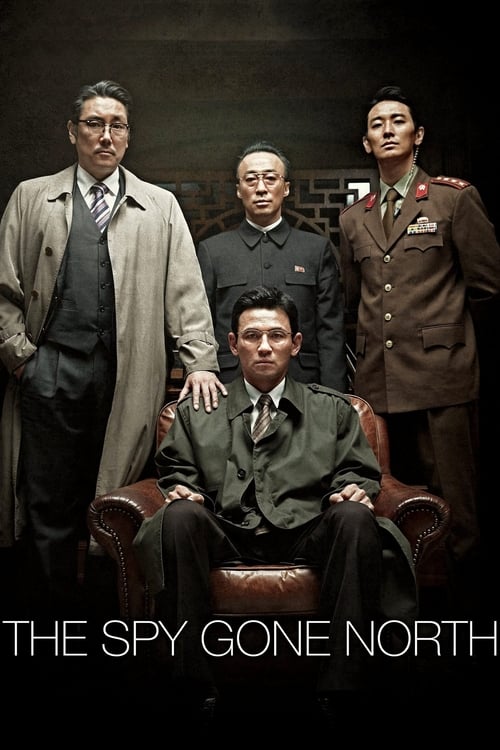
The Spy Gone North
Plot
South Korea, 1993. An agent of the National Intelligence Service is sent to Beijing to infiltrate a group of North Korean officials with the ultimate goal of obtaining information about their nuclear program.
Get the Weekly Woke Watchlist
New and trending movies scored for woke bias, preachy messaging, and forced political themes — before you waste your evening.
No spam. One useful email per week.
Overall Series Review
Categorical Breakdown
The entire cast and political context are Korean, eliminating any elements of vilification of whiteness or race-swapping. Characters are defined by their political loyalty, professional skill, and moral choices. The central conflict is ideological and nationalistic (North vs. South), not based on immutable characteristics or intersectional hierarchy.
The film does not target Western civilization or its values. Its criticism is focused on specific, corrupt South Korean political and intelligence institutions which collude with the enemy to serve their own partisan power, betraying a loyal agent. The narrative simultaneously shows the horrors of the North Korean totalitarian state and ends on a note of reconciliation, valuing the unity of the Korean people over corrupt political systems.
The core cast and driving forces of the plot—the spy, his handlers, and the North Korean officials—are all male. The narrative is a classic political and military espionage thriller that contains no prominent 'Girl Boss' tropes, male emasculation, or anti-natalist messaging. Gender dynamics do not form a central or commented-upon theme.
The narrative is entirely preoccupied with Cold War-era political espionage, nuclear intelligence, and South Korean election tampering. There is no presence of alternative sexual ideologies, centering of LGBTQ+ characters, or deconstruction of the nuclear family. Sexuality remains private and is not a thematic focus.
The moral conflict is political and ethical, centering on the choice between blind institutional loyalty and the greater good of peace. There is no discussion of or hostility toward traditional religion, nor are religious figures depicted as villains or bigots. The film's moral framework is defined by objective truths of political betrayal and human decency, not moral relativism.
Get the Weekly Woke Watchlist
New and trending movies scored for woke bias, preachy messaging, and forced political themes — before you waste your evening.
No spam. One useful email per week.