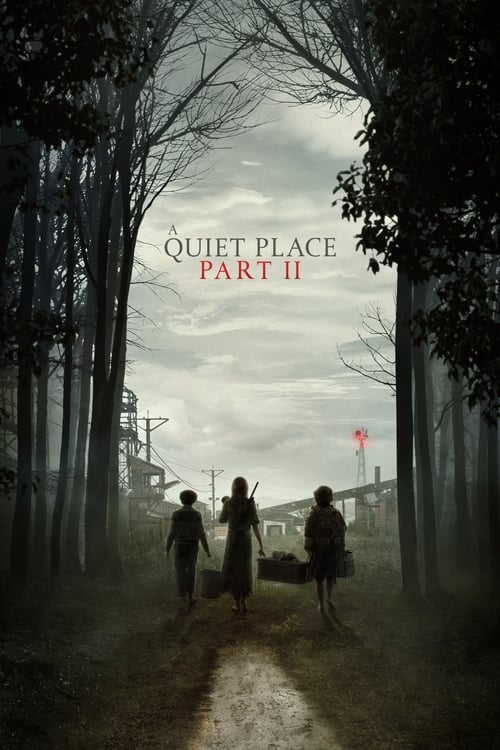
A Quiet Place Part II
Plot
Following the events at home, the Abbott family now face the terrors of the outside world. Forced to venture into the unknown, they realize that the creatures that hunt by sound are not the only threats that lurk beyond the sand path.
Get the Weekly Woke Watchlist
New and trending movies scored for woke bias, preachy messaging, and forced political themes — before you waste your evening.
No spam. One useful email per week.
Overall Series Review
Categorical Breakdown
The film does not center its narrative on race or an intersectional hierarchy. The main conflict is survival against the aliens. The daughter, Regan, who is deaf, becomes the central hero due to her unique natural characteristic and an invention that weaponizes it, making her role one of meritocratic contribution rather than a lecture on disability or privilege. The supporting cast is naturally diverse without any narrative focus on 'race-swapping' or the vilification of white characters based on their identity.
The film strongly portrays the family and the values of community and sacrifice as essential to survival. The main characters' goal is to leave their safe, small world to save others, moving from isolation back toward community. Institutions like family are consistently viewed as the primary shield against chaos. The narrative respects the sacrifices of the father and other ancestors and heroes of the past, with the younger generation honoring their memory and continuing their fight.
The daughter, Regan, takes the role of the primary hero, finding the key to defeating the monsters and embarking on the main quest. The mother, Evelyn, is a capable and physically strong protector of her children, including a newborn. While the teenage female lead is essential and saves a jaded male figure, the theme is one of complementary heroism, as the young son also performs a heroic action. Motherhood is unequivocally celebrated as a vital element of survival and hope in the apocalypse.
The narrative focuses entirely on the traditional nuclear family unit's struggle to survive and protect one another. There is no presence of alternative sexualities, deconstruction of the male-female pairing, or insertion of gender ideology. The structure remains strictly normative.
Religion is not a factor in the story. There are no characters who are explicitly religious figures, and the moral landscape is based on secular, post-apocalyptic humanism concerning survival and community rather than a higher moral law or anti-religious sentiment. The film neither endorses a transcendent morality nor actively vilifies faith, leaving the spiritual aspect a vacuum without direct hostility.
Get the Weekly Woke Watchlist
New and trending movies scored for woke bias, preachy messaging, and forced political themes — before you waste your evening.
No spam. One useful email per week.