Chucky
Season 1 Analysis
Season Overview
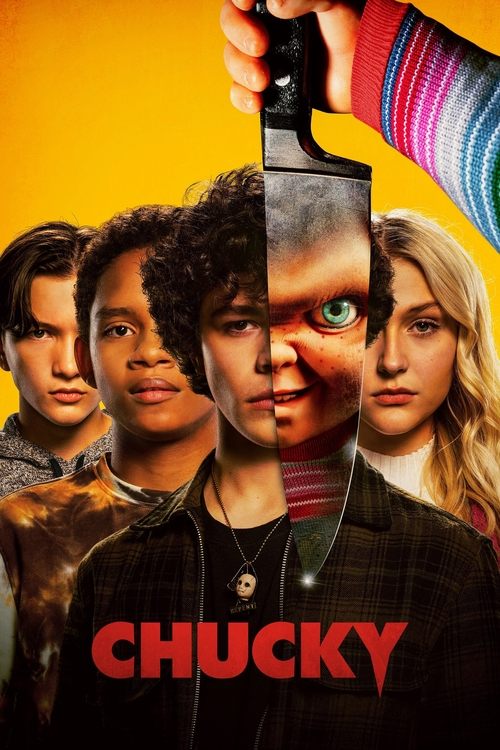
After teenage loner Jake Wheeler discovers a vintage 'Good Guy' doll at a suburban yard sale, a quiet American town soon erupts into mayhem as a blood-chilling murder spree begins to spill everyone's deepest and darkest secrets.
Season Review
Categorical Breakdown
The plot positions the protagonist, a troubled gay teen and loner, as the marginalized figure in conflict with the popular, richer crowd and his abusive father. The character’s struggle with his sexual identity is a foundational element of the story and drives his initial alienation, placing immutable characteristics at the center of the narrative rather than focusing purely on universal character merit. The protagonist is defined by his outsider status.
The central setting, the 'quiet American town' of Hackensack, is immediately revealed to be a hotbed of "deepest and darkest secrets" that are violently exposed by the doll. The protagonist's home is immediately toxic, featuring an abusive father who is killed. This framing presents the institution of the traditional American family and the suburban environment as fundamentally corrupt, which aligns with hostility toward one's home and civilization's family structure.
The primary male authority figure, Jake's father, is abusive and is quickly dispatched by Chucky, fitting a 'toxic male' trope. Other adult males are shown as secondary or ineffectual. While no female leads are depicted as instantaneous 'Mary Sues,' the main teenage female character, Lexy, is initially portrayed as a popular bully, though she develops a more complex arc. The show does not heavily feature anti-natal or career-obsessed messaging, keeping the score in the middle range.
The core plot is a 'queer-centered subplot' and a coming-out story for the lead character, Jake Wheeler, whose struggle with his sexual identity defines his arc. His romantic relationship with a male classmate is an essential and emotional component of the season. The show explicitly has Chucky, the serial killer, confirm himself as an 'ally' by saying he is 'not a monster' for accepting his gender-fluid child, Glen, thereby centering the sexual ideology as a point of moral superiority within the narrative itself.
There is no direct antagonism or vilification of organized religion, specifically Christianity, in the primary plot. The narrative operates within a horror-supernatural framework, acknowledging a spiritual vacuum where morality is situational and subjective to the themes of violence and psychological darkness. The focus is not on dismantling faith institutions but on psychological trauma and serial killer nihilism.